
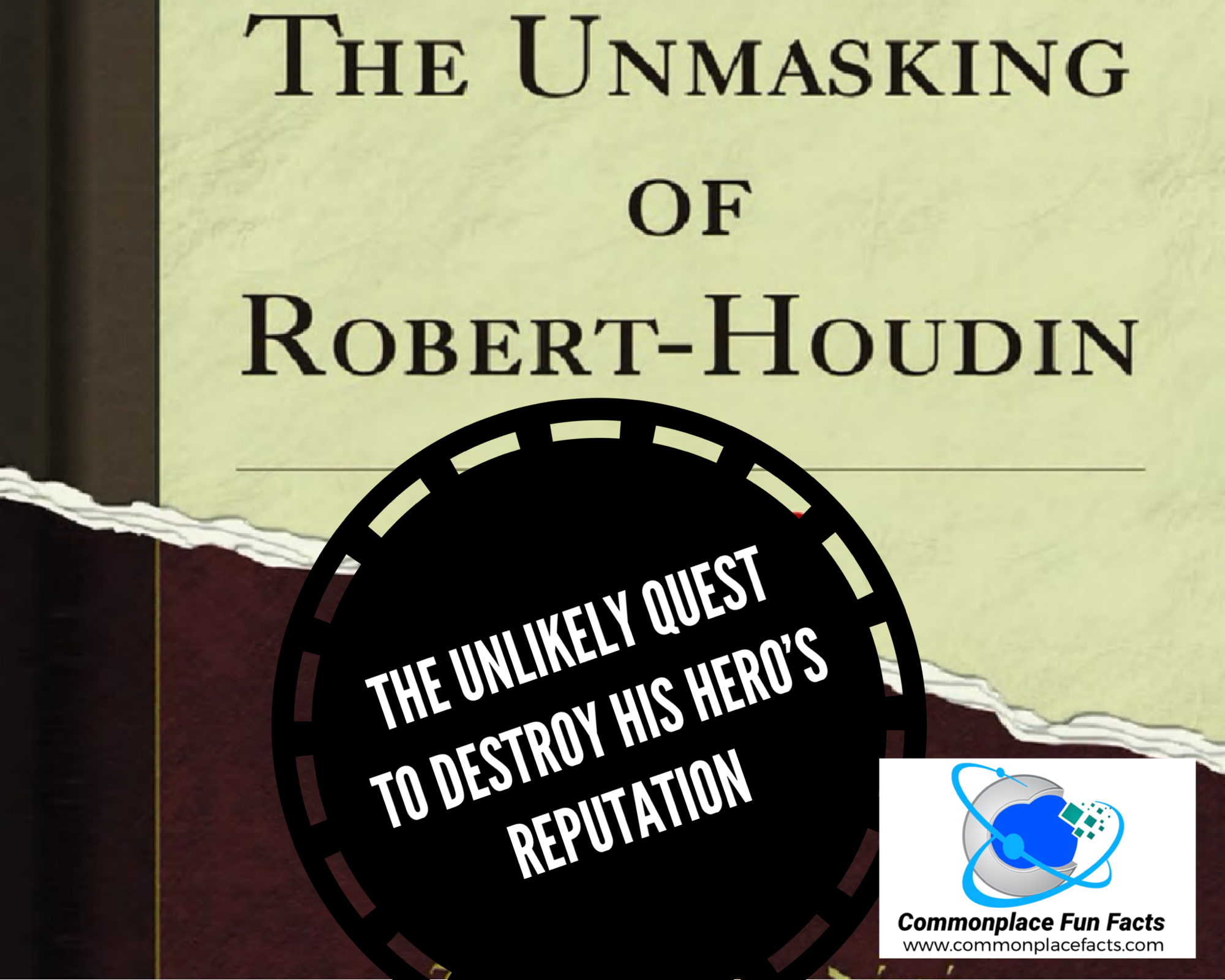

The specific relevant content for this request, if necessary, delimited with characters: Jean-Eugène Robert-Houdin was a fraud, and Erik was determined to prove it. The whole world might think that Robert-Houdin was the greatest, but Erik was on a quest to show that the performer’s greatness was just one more illusion. By the time Erik was done with him, no one would associate the name with anything other than derision.
It wasn’t always that way. Erik Weisz was once quite enamored with the man who would become his nemesis. He certainly wasn’t the only one. Jean-Eugène Robert-Houdin was one of the greatest showmen of his time. The French magician is credited by many as being the father of modern magic performers.
Robert-Houdin was born in 1805 in France. He was trained as a clockmaker. His life changed when he saved up the money to purchase a two-volume set of books about clockmaking. By mistake, he was sent the two-volume Scientific Amusements. These books instructed him about the art of illusion and performance magic.
In 1845, Robert-Houdin opened the 200-seat Théâtre Robert-Houdin with a performance entitled “Soirées fantastiques.” It was a disaster. Undaunted, he tried again and again, each time learning from his mistakes.
As his illusionist skills improved, so did his showmanship. He incorporated humor, artistic flair, and elaborate stage designs to enhance the overall experience for the audience. He developed a mind-reading act in which an assistant would take items from members of the audience. A blindfolded Robert-Houdin was able to describe each item in detail.
As the illusionist’s reputation grew, so did his retinue of unbelievable tricks. He was seemingly able to cause his son to levitate in mid-air. He could also cause a seed to grow into a fully mature fruit tree before the eyes of the spectators. With every new illusion, Robert-Houdin’s fame spread throughout France and beyond.
We don’t know if Erik had heard about Robert-Houdin before reading his autobiography. We can say with certainty that reading The Memoirs of Robert-Houdin changed Erik’s life. He was captivated by the great showman and imagined him to be one of the greatest people of the age.
They say you should never meet your heroes. Magicians also caution that if you ever find out how they do their illusions, it will destroy everything that makes the trick so entertaining. Sadly, Erik learned the hard way that both of those warnings have some truth.
It was 1890 when Erik read Robert-Houdin’s memoirs. The great showman had already been dead for 19 years by that point, so he obviously couldn’t meet his hero. He tried to do the next best thing. He traveled to Blois, France, hoping to meet Robert-Houdin’s daughter-in-law and to get permission to visit the magician’s grave. He did not receive permission, but he visited the grave anyway.
As Erik looked upon the final resting place of his hero, his spirit burned with indignation. He felt disrespected and slighted by the family of the man he held in such high regard. No one who was related to such a man of such nobility would ever act that way. Perhaps Robert-Houdin wasn’t quite as great as Erik had thought.
The longer Erik stewed over his mistreatment, the more he directed his resentment toward his once-hero. In 1906, he wrote an article that cast aspersions on the father of modern magic and sent it to the French magazine L’Illusionniste. In the accompanying letter, he wrote, “You will certainly enjoy the article on Robert Houdin I am about to publish in my magazine. Yes, my dear friend, I think I can finally demolish your idol, who has so long been placed on a pedestal that he did not deserve.”

The more Erik looked into the life of the great illusionist, the more disillusioned he became. He found evidence that some of Robert-Houdin’s greatest illusions did not originate with him. Erik compiled his evidence, exposing Robert-Houdin as a fraud and liar. He showed that some of the magician’s most famous tricks had been performed by other illusionists years before Robert-Houdin claimed them as his own.
Erik felt that his case was so compelling that he published all of his findings in a book, Unmasking of Robert-Houdin. At last, Erik thought, the whole world will see that this man is no hero, and even his very name should be forgotten.
In his zeal to expose Robert-Houdin as a fraud, Erik may have jumped to a few unfair conclusions. Possibly, he even did a great injustice to the man he once held in such esteem.
If it’s any consolation, it was another of Erik’s mistakes that helped make sure the name of Robert-Houdin would never be entirely forgotten.
As we have said, reading Robert-Houdin’s autobiography changed Erik’s life. He was so inspired by the life story of the great illusionist that he decided to enter that profession too.

Reading about Robert-Houdin not only inspired Erik to change the direction of his life. It also prompted him to change his name. And that’s where we come back to that mistake. Erik wanted to show how much he felt indebted to the influence of his hero that he wanted his stage name to reflect it. Unfortunately, Erik was Hungarian, with a poor mastery of the French language. He thought his new stage name meant, in French, that he was similar to his idol. In reality, his name is better translated in Hungarian to say that he belongs to the man whom he came to despise.
Most ironically, Erik set out to blot Robert-Houdin’s name from memory. If you search for details about Erik’s life, however, you can’t help but find out all about the life of Jean-Eugène Robert-Houdin. That’s because although Erik failed to completely discredit Robert-Houdin, he succeeded beyond his wildest dreams in becoming an illusionist, escape artist, and showman whose reputation would outshine everyone else. His very name has become synonymous with magic.
You may not recognize the name of Erik Weisz. You most certainly know the name he adopted. The name, so close to that of his hero-turned-nemesis: Houdini.

The Mother Who Told Her Son He Would Be All Right
Meet the mother whose quiet encouragement inspired her son to honor her in one of history’s most consequential moments.

The Two Boys Named Leslie Who Grew Up to Become American Icons
Two boys named Leslie, born 10 years apart, changed their names, and became American icons. Follow their remarkably different lives and see if you can identify them.

How California Got Its Name from a Mythical Island, a Warrior Queen, and a Book Most People Have Never Heard Of
A mythical island ruled by warrior women? Find out how California got its name from a book that no one remembers.





Leave a Reply