
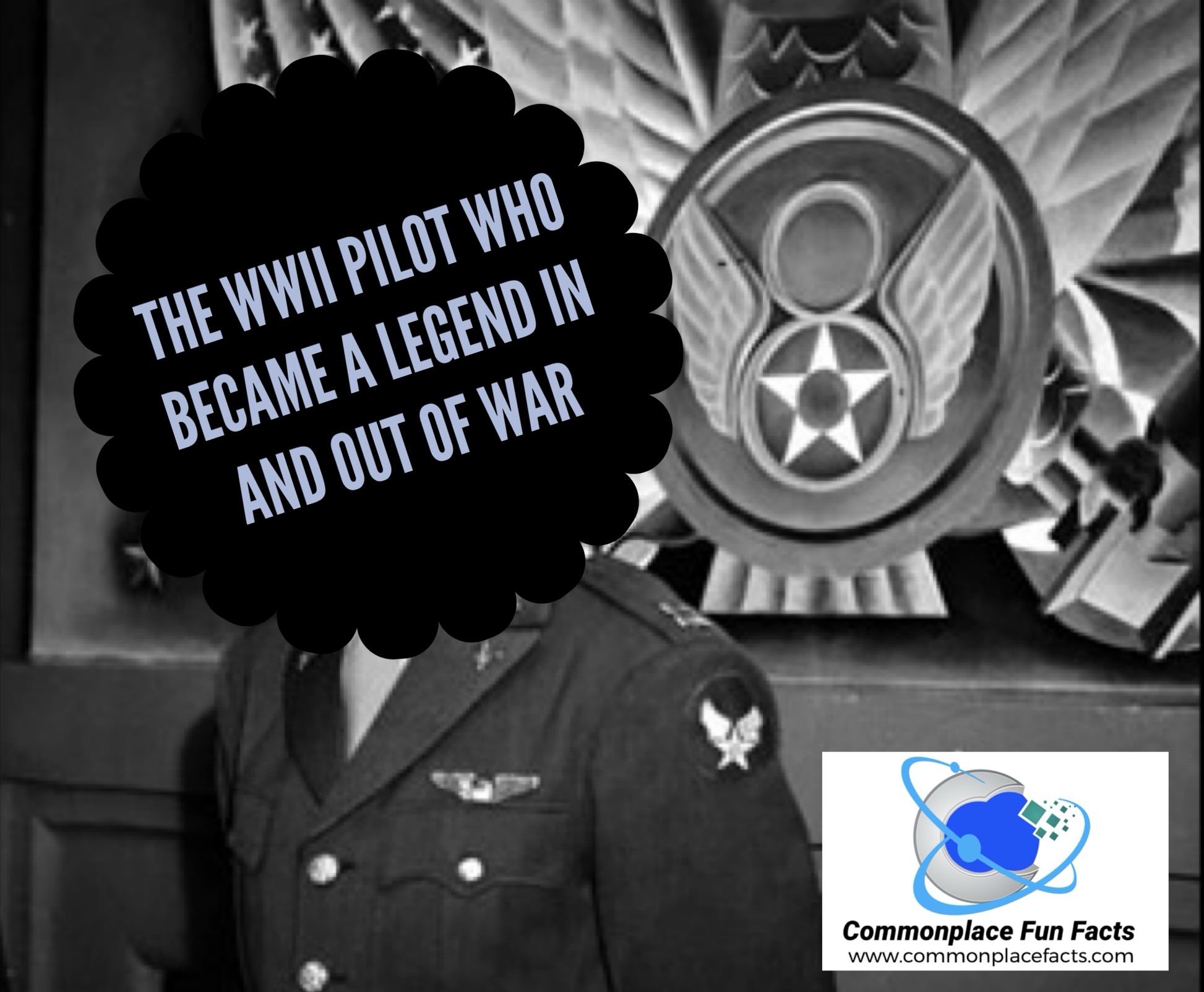

The sound of the impact was deafening. More than 18,000 feet above the German city of Fürth, the World War II B-24 bomber Dixie Flyer has just delivered its full payload upon a German factory. The explosions signaled the end of the German plant’s ability to build aircraft. In just a few moments’ time, the factory would become a scrap heap. It would seem the mission was over, but for Jim, it had only just begun.
Contents
Jim’s Fateful Flight
Jim was the copilot of Dixie Flyer and the leader of the whole bombing group. The mission had gone according to plan until his plane was jolted so powerfully that only the harnesses prevented him from being thrown from his seat. He looked down through the gaping hole caused by enemy fire. His aircraft was in serious trouble, and he realized he might have just moments remaining in his life. He had a lot to do and little time to contemplate whether it had been a wonderful life.
Operation Argument: The Big Week
Officially, it was known as Operation Argument. Later, those who were involved referred to it as “The Big Week.” The U.S. Army Air Forces and the RAF Bomber Command teamed up from February 20 to 25, 1944, to target the German aircraft factories in southern Germany. It was an essential prerequisite to the upcoming D-Day invasion of Europe.
How Jim found himself in the B-24 Liberator bomber that day is a story in itself. He left a successful career back home and answered his country’s call to service. He easily could have avoided combat if he chose. Initially, he failed his physical examination because he was underweight. Undeterred, he tried again. Some say that he arranged to have a friend work the scales that day and tip the weight in his favor. Others say that he gorged himself with bananas prior to weighing in. Regardless, he was able to enlist as a buck private.
An Unlikely Soldier
He was considered a successful and key member of his industry. As a result, those who were in charge wanted him assigned to light, safe duty. Jim wouldn’t hear of it, though. He had learned how to pilot a plane before the war started, and he knew skilled pilots were in short supply.
Then there was the issue of his age. At 33 years old, he was too old for the Aviation Cadet program. He got around this by seeking an officer’s commission, citing his college degree and his pilot’s license. Eleven months after enlisting as a private, Jim received his commission as a second lieutenant.
That was only the beginning. By the time Big Week arrived, Jim had risen to the rank of major and was commander of the 703rd Bomb Squadron, 445th Bomb Group, at Tibenham, Norfolk, flying B-24 Liberators.
Rough Skies Over Europe
Jim flew the first day of Big Week over the Netherlands. It was considered a major success even though three planes in the 445th went down. One of his pilots called it “the roughest 10 or 15 minutes I ever spent.”

On Feb. 24, Jim was standing below Station 124’s tower when the remnants of the day’s planes limped home, some still smoking and on fire. Twenty-eight planes had taken off that morning, headed for the German city of Gotha, but three needed to return due to technical troubles while over the English Channel. Of the remaining 25 bombers in the air, only 12 returned. More than half had been shot down.
The next day, Jim would lead the 445th again in the skies for his second Big Week mission; this time, over Fürth, an area just northwest of Nuremberg. The mission was part of an ambitious push that would send 754 B-17s and B-24s, with an escort of 20 groups of Eighth Air Force fighters and 12 squadrons of RAF Spitfires and Mustangs, into southern Germany to attack three Messerschmitt aircraft production centers and a ball-bearing plant.
It was immediately after dropping the plane’s payload that the crisis hit. A German shell pierced directly through the center of his B-24 Liberator. The whiplash was so intense that only harnesses kept him in his seat. Jim was shaken by the impact. The pilot, Capt. Neil Johnson, struggled to stop his hands from shaking so he could control the aircraft. For a moment, the entire plane was consumed with smoke as it violently lurched upward. When Jim regained his bearings, he saw he could look down through the hole in the aircraft. The edge of it was inches from his boot. Almost two feet in width, the gap offered a clear view through the plane’s fuselage and straight onto the German landscape below. He could be forgiven if he admitted to experiencing more than a little vertigo.
Jim had no time to devote on worry. The German ground defenses and their 88mm shells were rattling the sky with more flak, and out of the corner of his eye, Jim could see one of his planes take fire. That crew was not as lucky. Jim watched as as a wing tore off and the craft fell to the earth. Meanwhile, German Focke-Wulf 190 fighters started to swarm. Looking behind him, a hole in the aircraft formed a rear window through which all of the crew’s parachutes had disappeared.
Jim’s 445th Bombing Group had only each other and the tightness of their formation for protection—the Eighth Air Force and RAF fighters that accompanied the mission were spread too thin across the rest of Operation Argument’s ambitious list of targets. On top of that, they were a long way from home.
Relief from Allied fighter planes never came, but most of the 445th somehow made it back to the English Channel that day. With its fuselage in tatters, Jim’s plane lost two of its engines before it saw the English coastline. While running on fumes, the pilots had to use every bit of their skill to safely land. Only after landing and inspecting their plane did they realize it had been literally breaking apart as it touched down, with a crack ripping from the bulkhead to the cockpit.
The plane’s bombardier Jim Myers recalled, “[Jim] was blue from the cold whistling through the holes in the plane, but he hadn’t received a scratch.” At least not physically.
The Toll of War
A crew member reflected on that mission and what it did to Jim. He said, “It was very interesting. The plane cracked and Jim cracked.” No one officially ever said Jim became “flak happy” (the nickname for PTSD at the time) after the mission over Fürth, but Jim’s comrades knew it without saying it. It would be another two weeks before Jim’s commanding officer would allow him to fly again.
“This was the first time that he had to miss turns in the rotation, the leadership rotation leading missions,” said a member of the crew. “And that’s a huge deal to him. That’s him letting himself down in his crazy dedicated mind, in his perfectionist mind. All of a sudden, he’s not up to commanding in the air because he had been flying steady, steady, steady, then all of a sudden you look after February 25th, and he didn’t fly again till March 15th, and that’s a long time for him, and then he flew again on March 25th, then he didn’t fly again at all for a while.”
Jim eventually returned to the skies, but he was never quite the same. For the rest of his life, he spoke with a bit of a stammer and drawl. His gentleness and everyman persona belied any unresolved inner turmoil. Whatever was going on inside him, he did a good job of compensating. In other words, no one thought for a moment that he was the kind of guy who could see imaginary rabbits.
General Jimmy Stewart: A Highflying Hero

Jim continued to serve through the end of World War II and beyond. In 1945, he was promoted to colonel, becoming one of the few Americans to go from private to colonel in four years. He rose to the rank of brigadier general in 1957. Although he retired from the Air Force in 1968, he continued to remain actively involved with the service. He was a founding member of the Air Force Association. In 1987, President Ronald Reagan promoted him to the rank of major general on the retired list. It was, for Jim, truly a wonderful life.
Jim’s story might sound like it’s straight out of a movie, and in many ways, it is. After all, Jim had a knack for dramatic entrances, whether in the skies over Europe or on the silver screen back home. You see, Jim wasn’t just any pilot; he was Jimmy Stewart, the beloved actor known for his roles in classics like “It’s a Wonderful Life,” “Mr. Smith Goes to Washington,” and “The Philadelphia Story.” But during those harrowing days of World War II, Jim was just another airman facing the horrors of war, showing the exceptional courage and dedication that served him for the rest of his life.

A Tale of Two Boys and Their Fathers’ Creations That Ruined Their Lives
Chris and Denny might as well have been brothers. They had so much in common — particularly their conflict with their fathers — that it almost looks as if they had the same father. Lots of people blame their parents when things go wrong, but for Chris and Denny, they probably had some legitimate concerns…

Jackie Coogan: The Child Star Who Lost It All and Crawled Back to Fame
Jackie Coogan, the world’s first child superstar, experienced the highs of fame and the lows of loss. From performing as a child in Vaudeville to starring in classic films, he faced financial exploitation and personal tragedy. Despite this, he found a second wave of fame as Uncle Fester in The Addams Family, leaving a lasting…

The Boy Who Rejected His Right to be King
What do you make of someone who renounces his birthright — especially when that means renouncing the right to be King? The story has played out before, triggering the expected media firestorm. There is the example of King Edward VIII, who gave up his throne to become the Duke of Windsor. Today’s tabloids and talk…

Leave a Reply