

Contents
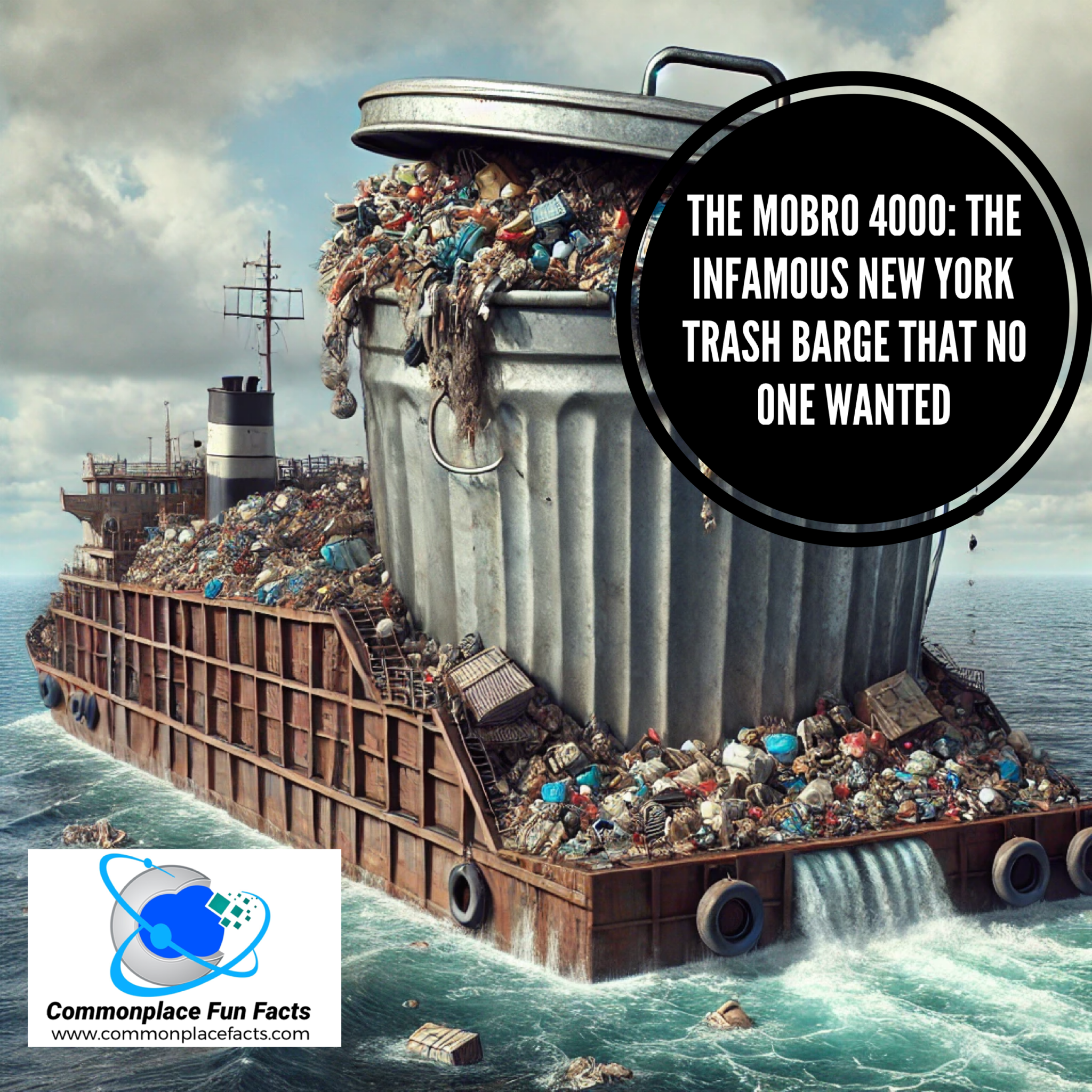
It was an epic cruise that only Oscar the Grouch would have enjoyed. We refer, of course, to the Mobro 4000. Mobro 4000 sounds like a great name for a video console or possibly an electric toothbrush. It was about as far from stylish as one could imagine.
The Mobro 4000 was a barge filled with over 3,000 tons of New York trash that went on a months-long voyage around the East Coast, the Caribbean, and a few rather unwelcoming countries in a desperate effort to find a place to dump the garbage. Despite what they say about not being able to go home again, this humble barge proved one thing: there was no place but home for its cargo.
The saga of the Mobro 4000 is a tale of trash, politics, and perhaps the worst travel itinerary ever. What began as a simple plan to find a new home for New York’s refuse turned into a global media frenzy and a national debate on waste management. So how did one garbage barge get rejected by half the world? Let’s dive into this trashy tale.
A Rotten Start: The Mobro’s Origins
It all started with an Alabama entrepreneur, Lowell Harrelson, who had a novel idea for making a quick buck. With landfills in New York and other urban areas rapidly reaching capacity, Harrelson figured he could cash in by shipping trash to other states with more room to spare. Enter the Mobro 4000, a 240-foot barge loaded with 3,168 tons of trash from Islip, Long Island, and New York City.
The plan was simple: float the barge down to Morehead City, North Carolina, where the trash could be converted into methane. What could go wrong? Well, just about everything.
The Bedpan Heard ‘Round the World
Things started to stink (naturally) when a local North Carolina news team caught sight of a bedpan perched atop the pile of trash. Suddenly, rumors of hazardous medical waste spread faster than the Mobro itself. We guess you could call it “trash talk.” Although most of the garbage was your standard household refuse from Long Island, the New York connection alone was enough to raise alarm bells. What if there was toxic waste hiding among the pizza boxes and newspapers? With public outcry mounting, North Carolina officials gave the Mobro its marching orders: get lost.
And thus began the odyssey.
A Journey of Rejection — Worse Than Our High School Dating Experiences

With North Carolina slamming the door, Harrelson tried other ports along the Gulf Coast, including Florida, Louisiana, and Mississippi. No dice. Even Belize and Mexico gave the garbage barge the cold shoulder. The Bahamas? Forget it. The Mobro was about as welcome as our moron cousin who always shows up for a visit at dinner time.
For two months, the barge wandered the seas like a smelly Flying Dutchman. With each new rejection, the barge’s infamy grew. Late-night talk show hosts like Johnny Carson made it the butt of their jokes. Environmentalists saw it as a symbol of America’s waste problem. Greenpeace even boarded the barge at one point to hoist a banner that read, “Next Time, Try Recycling.”
Finally, with no other options left, the Mobro 4000 turned around and headed back to its smelly roots in New York.
Returning home didn’t mean the barge was welcome with open arms, though. The plan was to dock in Queens and truck the trash back to Islip, where it had originally come from. But Queens Borough President Claire Shulman was having none of it. Armed with a court order, she blocked the barge from entering Queens, citing concerns over the trash’s mysterious contents. “It’s been sitting in the hot sun for weeks,” Shulman pointed out. “It probably contains tropical insects and vermin.” (Coincidentally, that’s also our concern about our moron cousin who always shows up to visit at dinner time.)
Islip’s supervisor, Frank Jones, wasn’t too thrilled with Shulman’s grandstanding either. “If she wants to get porky about it, we’ll identify how much of it is hers, and we’ll leave it on the dock for her,” Jones retorted. Thus began a public spat between Islip and Queens over whose garbage was really on board.
Anchors Aweigh (For Months)

With Queens saying no, the Mobro was stuck in limbo, anchored off Gravesend Bay, Brooklyn, for another three months. The barge drew plenty of attention—not all of it welcome. While tourists came to gawk at the infamous barge, agencies lined up to inspect the trash for hazardous waste. But despite their best efforts, no toxins were ever found. Unfortunately for the Mobro, its reputation stank even worse than its contents. (The same cannot be said for our moron cousin who always shows up to visit at dinner time; he is legitimately stinky, regardless of his reputation.)
Brooklyn Borough President Howard Golden, alongside environmental groups like the New York Public Interest Research Group (NYPIRG), fought against the state’s plan to incinerate the trash in Brooklyn. Golden’s concern was that burning the garbage would release dangerous toxins into the air. One environmentalist, Barry Commoner, famously referred to the incinerator as a “dioxin factory.”
A Fiery End (Sort Of)
In August of 1987, after months of legal wrangling, the New York State Supreme Court finally ruled that the garbage could be burned in Brooklyn. It wasn’t exactly a triumphant victory for anyone involved. As Golden remarked, the only thing his lawsuit accomplished was shedding light on the fact that taxpayers would be footing the bill for burning private garbage.
And burn it did. The trash went up in flames in Brooklyn, and the resulting ash—still not exactly the eco-friendly outcome everyone was hoping for—was buried in a landfill in Islip. It was a rather anticlimactic end to a saga that had captured the nation’s attention for months.
Trash Talk and Long-Term Consequences
The Mobro 4000 may have met its fiery fate, but its story didn’t go up in smoke. The saga left a lasting impact on how Americans think about trash. For one, it underscored the sheer volume of waste we generate—New Yorkers alone produce millions of tons of garbage each year. The Mobro’s story also highlighted the country’s growing landfill crisis. Even today, the issue of where to put all that trash remains a problem. And we haven’t even begun to talk about the trash that we left on the Moon.
The barge’s odyssey also spurred a broader environmental movement. In the wake of the Mobro fiasco, hundreds of cities and towns across the U.S. ramped up their recycling efforts. The incident even gave a boost to composting and other waste-reduction initiatives, although America’s love affair with single-use plastics still looms large.
Lessons From a Floating Dumpster
So what can we learn from this infamous floating dumpster? For one, it’s a stark reminder of the consequences of our throwaway culture. Every plastic bottle, pizza box, and disposable coffee cup adds up. While we may toss them in the trash without a second thought, the Mobro 4000 proves that the garbage doesn’t just disappear. It has to go somewhere—and sometimes, it takes a very, very long way to get there.
The saga of the Mobro also serves as a warning about the dangers of neglecting sustainable waste management practices. If we don’t deal with our trash responsibly, we might just end up like the barge: floating aimlessly, unwelcome wherever we go.
In the end, the Mobro 4000’s legacy is more than just a cautionary tale about waste. It’s a reminder of our collective responsibility to do better. Because when it comes to trash, the world can only handle so many floating barges before we’re all in deep…garbage.
With that, we leave have to go and hide. It looks like our moron cousin just showed up for a visit.
You might also enjoy…

Colombia Clashes With Cocaine Hippos
Why Is There Such a Thing as Colombia Hippos — Not to Mention Cocaine Hippos? It’s bad enough that Colombia has to deal with the ever-present problem of cocaine trafficking. Now it has to deal with cocaine hippos, as well. Colombian drug kingpin Pablo Escobar used a portion of his billions of ill-gotten dollars to…

The Svalbard Global Seed Vault: Noah’s Ark for the Planet’s Plant Life
Discover the story of the Svalbard Global Seed Vault and how it is designed to save the world’s plantlife.

The 1952 Great Smog of London: When a Whole City Disappeared For 5 Days
For five days in 1952, the Great Smog of London caused the whole city to disappear under a choking cloud of toxic fumes. Learn the distressing details.




Leave a Reply