
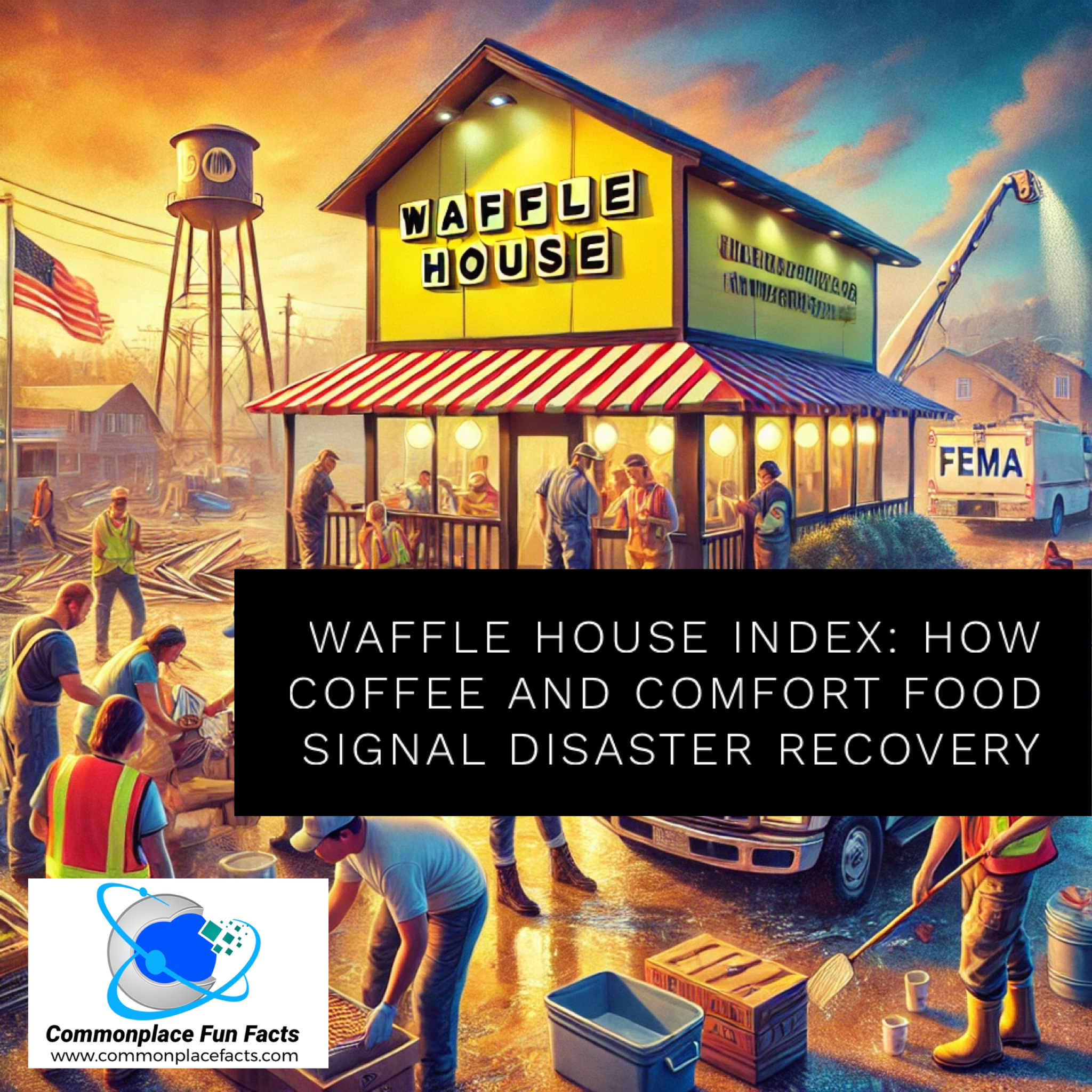

The Waffle House Index: Teaching the Government About Efficiency
By way of full disclosure, we’re not exactly fans of Waffle House. When it comes to trying to decide where to go when hunger pangs strike, Waffle House ranks somewhere on the scale between foraging for grubs and resorting to cannibalism.

Having said that, there is much we admire about the iconic restaurant chain. At the top of that list is the way that it manages to roll with the punches and open its doors for business even when the worst natural disasters strike. No doubt that is due to the fact that they aren’t in competition with Gordon Ramsay in terms of restocking the pantry. It is also because Waffle House leadership has devised a breathtakingly efficient method for preparing for and recovering from the worst that Mother Nature can throw at them.
Since speed and efficiency are concepts generally unknown to the federal government, the nation’s disaster response gurus look to Waffle House for guidance in assessing its disaster recovery plans. Welcome to the Waffle House Index, an unassuming yet brilliant metric that transforms a simple question—“Can I still get waffles?”—into a barometer of disaster recovery. Join us as we dig into why FEMA (yes, that FEMA) considers the status of Waffle House locations a legitimate measure of post-disaster chaos.
Contents
Waffles, Power, and Disaster Recovery
Here’s the deal: Waffle House is no ordinary diner. Known for its 24/7 operating schedule and sturdy menu of comfort food, it has become a cultural icon—and, as it turns out, a disaster response litmus test. The Waffle House Index is all about whether the lights are on, the griddle is hot, and the waffles are, well, waffling.

If you take a look at the locations of Waffle House franchises in the United States, you’ll see that they tend to be concentrated in the parts of the country that are most likely to be hit by hurricanes. Logic suggests that hurricanes are attracted to large concentrations of Waffle Houses, because Nature seems to have the same opinion of the food as we do.
Say what you will about those who run Waffle House but you can’t say that they are cowards in the face of unrelenting natural disasters. Because they always seem to be preparing for or recovering from the latest blast of bad weather, they have made the process of staying open or reopening as quickly as possible into a science.
Once it appears that something is on the horizon that could disrupt operations, the local team gets its disaster plans in motion. (We wonder, however, how they could possibly have prepared for the great Cleveland Balloon Disaster, but that’s another story.) They stock up on nonperishable items, refine their communications system with employees, brace for the worst.

Once the immediate crisis has passed, the restaurant reopens to the best of its ability. Employees check in and report if they are safe and able to come to work. If there is power and water, everything operates as normal. If there is no power but there is water, the restaurant can reopen and serve a limited menu, such as coffee (heated with non-electric means, such as gas). Employees from other locations may volunteer to come to the affected areas to help with whatever service they can muster.
FEMA’s Waffle-Based Assessment
The Federal Emergency Management Agency (FEMA) uses the status of Waffle Houses to quickly assess how much damage was caused by a disaster. Using a color-coded system, each Waffle Houses in a disaster area is assessed. Green means the full menu is available, signaling that the area likely has power and water. Yellow indicates a limited menu, suggesting power might be out, but there’s gas for cooking. Red means the restaurant is closed, a surefire sign that things are bad. Very bad.

Why does this matter? Because if Waffle House is open, so is the path to recovery. A functioning Waffle House means workers have jobs, hungry neighbors have food, and that little taste of normalcy can be served with a side of hash browns (scattered, smothered, or otherwise). Another key factor is whether there is food (or at least coffee) available for emergency responders.
It’s Not Just About Waffles
Waffle House is just the tip of the syrup-drenched iceberg. Businesses in disaster-stricken areas are often the engines of recovery. If stores can reopen, people can work, shop, and rebuild. A bustling hardware store means residents can grab supplies to patch roofs or unclog flooded basements. A grocery store stocked with bottled water, batteries, and nonperishables becomes a lifeline for the weary and waterlogged.
In small towns, coffee shops and diners aren’t just places to grab a bite—they’re community hubs. A simple cup of coffee can feel like a hug in a mug for someone who’s lost everything. A quick chat with a neighbor over breakfast can remind folks that they’re not facing the cleanup alone.
The Private Sector Steps In
The private sector gets it. After disasters like Hurricanes Harvey and Irma, businesses rolled up their sleeves and stepped into action. Companies like Target and Lowe’s donated millions to trusted organizations. Clorox and Walmart provided essential supplies to hard-hit communities. FedEx worked with nonprofits to transport resources to where they were needed most. It’s like a corporate Avengers, but with fewer capes and more bottled water.
Grocery stores, often the first stop for recovering communities, played a vital role. Publix, a Florida-based chain, raised money for the Red Cross after Harvey devastated Texas. In a heartfelt display of mutual support, Texas-based H-E-B sent supplies to Florida after Irma struck. Turns out, regional grocery store rivalries take a backseat when humanity calls.
Then there are the local heroes—the corner diners, the neighborhood mom-and-pop shops—doing what they can to reopen their doors. A small-town café that manages to serve even a limited menu can feel like a beacon of hope in the storm’s aftermath.
Sports Teams in the Game
Sports teams have also become MVPs in disaster recovery. Professional and collegiate teams alike have rallied their fan bases to help. Ticket vouchers in exchange for donated supplies? Check. Home run campaigns raising money for relief? Check. Athletes volunteering their time to lend a hand? Double check.
A World of Generosity
It’s not just businesses and sports teams stepping up. The outpouring of support from ordinary people has been nothing short of inspiring. From families opening their homes to disaster survivors to volunteers traveling across the country to lend a hand, it’s a reminder that the human spirit is as indomitable as a Waffle House grill cook during a lunch rush.
Charitable organizations have also been pivotal. Groups like Team Rubicon, which enlists veterans to assist in disaster recovery, and Hope Animal-Assisted Crisis Response, which provides trained comfort dogs to traumatized communities, offer unique and meaningful support. And let’s not forget the local food banks and pantries that keep communities fed in times of crisis.
How You Can Help
Feeling inspired? Good. The work isn’t over, and there are plenty of ways to get involved.
Monetary donations to trusted organizations are the most flexible and effective way to help. Cash allows relief groups to buy what’s needed, when it’s needed. If you prefer a hands-on approach, consider volunteering with a disaster relief organization or your local food bank. Every little bit—whether it’s hammering nails, packing boxes, or simply writing a check—makes a difference.
The National Voluntary Organizations Active in Disaster offers a list of nearly 60 groups doing incredible work in affected communities. Whether your heart leads you to faith-based missions, veteran-led efforts, or organizations focused on animal welfare, there’s a cause that aligns with your passions.
The Power of a Waffle
In the wake of disaster, it’s easy to focus on what’s been lost. But the Waffle House Index reminds us to look at what’s still standing. A cup of coffee, a plate of bacon and eggs, or even just the glow of a diner sign can symbolize resilience, hope, and the first steps toward rebuilding. Because sometimes, recovery starts with something as simple as a waffle.
So we extend our thanks and appreciation to Waffle House. We’re still not planning on eating there.
You may also enjoy…

The Iroquois Theater Fire: When “Fireproof” Proved to Be Just a Punchline
Discover the tragic story of the 1903 Iroquois Theater fire in Chicago. Learn how design flaws, corruption, and hubris led to over 600 deaths—and how Eddie Foy became an unlikely hero.

Thomas Jefferson’s Nephews, a Grisly Murder, and the Earthquake That Wouldn’t Let Them Get Away With It
Uncover the chilling true story of Thomas Jefferson’s nephews, Lilburn and Isham Lewis, who murdered an enslaved boy during the catastrophic New Madrid earthquakes of 1811–1812. A haunting tale of crime, chaos, and historical fallout.

The Disaster That Haunted An Unlikely Hero
The weather couldn’t have been better for travel. As Charlie made his way home by train, neither he nor his fellow passengers had any clue that they were headed toward an unspeakable tragedy that would go down in history as the terrible Stapleton rail crash. It was June 9, 1865. Passengers arriving from across the…



Leave a Reply