
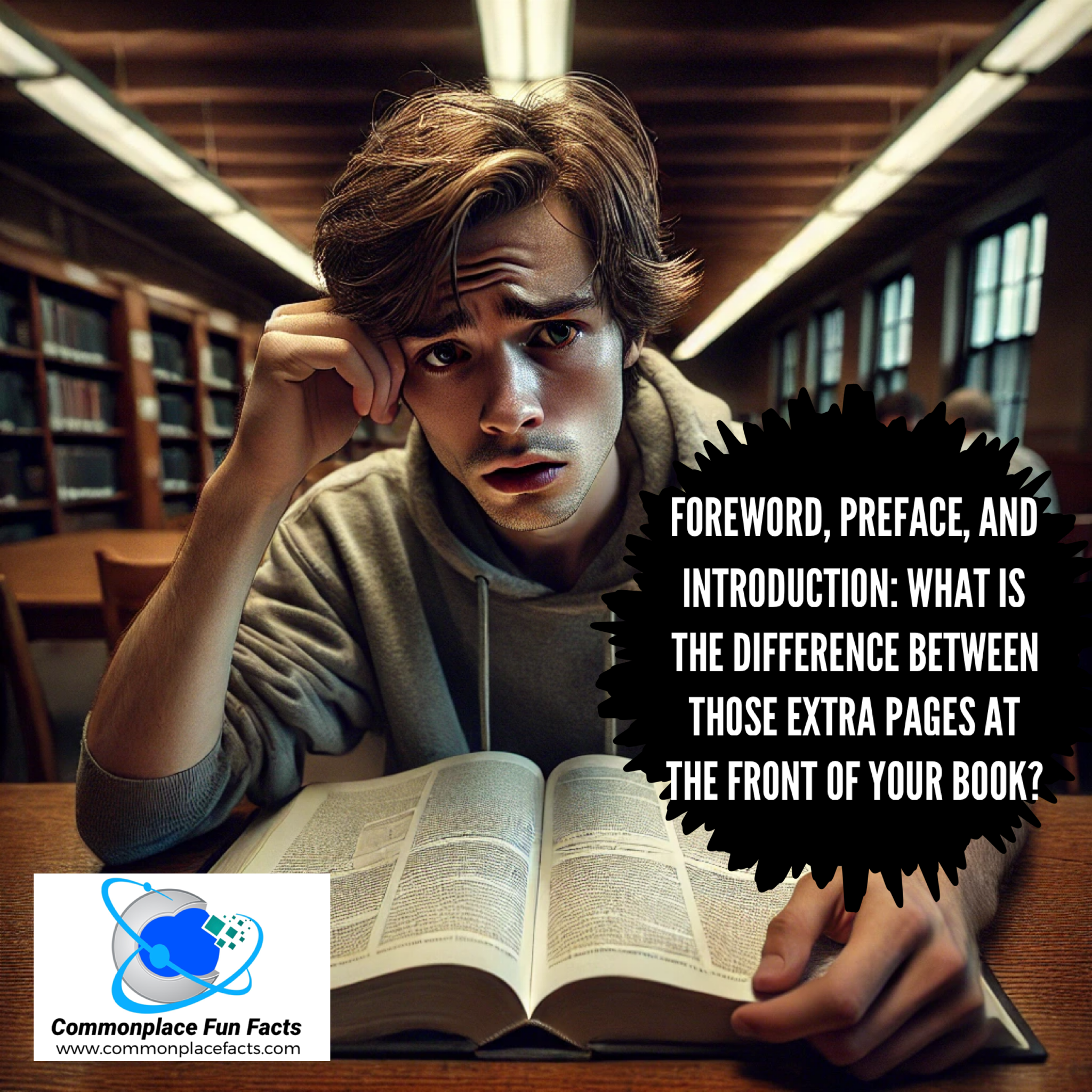

Ready to Read, But First… Foreward… Preface… Introduction… Why?
Every bookworm has been there. The long-awaited book arrives in pristine packaging, and with all the enthusiasm of a kid on Christmas morning, you rip it open. You take a deep breath, savoring that intoxicating new-book smell, and eagerly flip the cover. But wait! Instead of diving straight into chapter one, you’re greeted by something called a Foreword. You read that and get ready for the good stuff, only to find a Preface. After that, you have an Introduction. What are all of these things? What is the difference? What are these mysterious pages, and—more importantly—do they actually matter?
Honestly, it’s a lot like those online recipes. We just want to know what ingredients we need and how we are supposed to mix them together. Instead, the author feels compelled to tell us about why this recipe meant so much to her grandmother because her great-grandmother used to wax eloquently about stewed beets while washing her knickers in the creek on the third Tuesday of every month in the backwoods of western Nowheresville during the time of the great migration of the great and fearsome Michigan cornhopper who used to steal Great-Grandpappy’s woolen gloves that were made by his Aunt Heloise when she was….
Well, you get the idea. Is there some kind of rhyme or reason in the mysterious world of book structure that defines what is a foreword, preface, introduction, etc.?
Fear not, dear reader. We’re here to clear up the confusion, so you can decide whether to dive into these literary appetizers or skip straight to the main course.
Contents
What Is a Foreword?
A Celebrity Shout-Out
First up is the Foreword. Please note that it is “foreword” not “forward.” If there is anywhere that spelling matters, it’s in the literary world. The foreword is a short piece written by someone other than the author—typically a Big Deal in the book’s subject area. Think of it as the literary equivalent of a celebrity cameo: its purpose is to boost the book’s credibility and, let’s face it, marketability.
Learn about the book with a title that is over 3,500 words long
The author of the foreword might be a renowned expert in the field, a bestselling author, or even someone famous whose opinion holds weight. They’ll often gush about the book’s brilliance, sing the praises of the author, and give you compelling reasons to keep reading. Publishers love forewords because a glowing endorsement from a respected figure can make a book seem like the hottest thing since sliced bread.
Fun fact: If the book you’re holding is a re-release or new edition, the foreword might include reflections by someone who admires the original work—a sort of literary homage. So if you see a foreword written by someone like Stephen King, you can bet it’s worth a read (and probably terrifying).
What Is a Preface?
A Peek Behind the Curtain
Next, we have the Preface. Unlike the foreword, this section is written by the book’s author. Think of it as the author pulling back the curtain and letting you in on the creative process. The preface answers questions like:
• Why did I write this book?
• What inspired me?
• How many gallons of coffee fueled this masterpiece?
The author might also share fun tidbits about their journey—unexpected challenges, helpful mentors, or bizarre moments of inspiration (“I wrote the entire first draft on cocktail napkins during a transatlantic flight”). They’ll often end with a heartfelt thank-you to everyone who helped make the book happen. If you’re the kind of reader who loves the story behind the story, the preface is where you’ll find the good stuff.
Pro tip: The preface is typically signed by the author, often with a date and location. It’s like a tiny literary postcard that says, “Greetings from the creative trenches!”
What Is an Introduction?
Setting the Stage

Finally, we arrive at the Introduction. This one’s a bit more straightforward and, well, functional. Written by the author, the introduction sets the tone for the book and explains what you’re about to dive into. It’s the literary equivalent of the opening act—laying out the purpose, themes, and goals of the work.
In nonfiction, the introduction is crucial. It might outline the key arguments, provide background information, or offer a roadmap of what to expect. In fiction, it’s less common, but when present, it might give you a teaser of the world you’re about to enter or a hint of the story’s central themes.
Unlike the preface, the introduction is often directly tied to the main text. If you skip it, you might miss important context or clues. (But hey, we’re not here to judge your reading habits.)
The Cheat Sheet
| Foreword | Preface | Introduction | |
|---|---|---|---|
| Author | Another author, celebrity, or expert | Author of the book | Author of the book |
| Placement | At the start of the book | At the start, after the foreword | At the start, after the preface or foreword |
| Purpose | Endorses the book or author; adds credibility | Explains why and how the book was written; often includes acknowledgments | Sets the stage for readers by explaining the purpose and key concepts |
Should You Read Them?
On the other hand, if you’re itching to get to the good stuff, go ahead and skip ahead. The beauty of books is that they’re patient—those extra pages will still be there if you decide to come back.
Of course, if you’re one of those people who read the last chapter of a mystery before you read anything else, you should know that we not only will judge you, but we won’t even attempt to disguise what we think about such barbaric practices.
You may also enjoy…

Benjamin Franklin’s Advice On Living and Writing
“If you would not be forgotten as soon as you are dead and rotten, either write things worth reading, or do things worth the writing.” — Benjamin Franklin

Bad Handwriting Responsible for Up to 61% of Prescription Errors
It is a standing joke that physicians have horrible handwriting. It turns out this may not be such a laughing matter. A number of studies have found that sloppy handwriting is just as deadly to patients as the disease for which they sought treatment. The quality of physician handwriting is a widespread problem. A 2002…

Uncommon English Words and Their Surprising Definitions
The English language is constantly evolving, with new words added each year and old ones falling out of use. Words like “betrump” and “cony-catch” have faded into obscurity, while others have evolved in meaning. Even though language changes, the essence remains, as exemplified by the word “teen.” Samuel Johnson’s 1755 dictionary offers insight into these…

Leave a Reply