
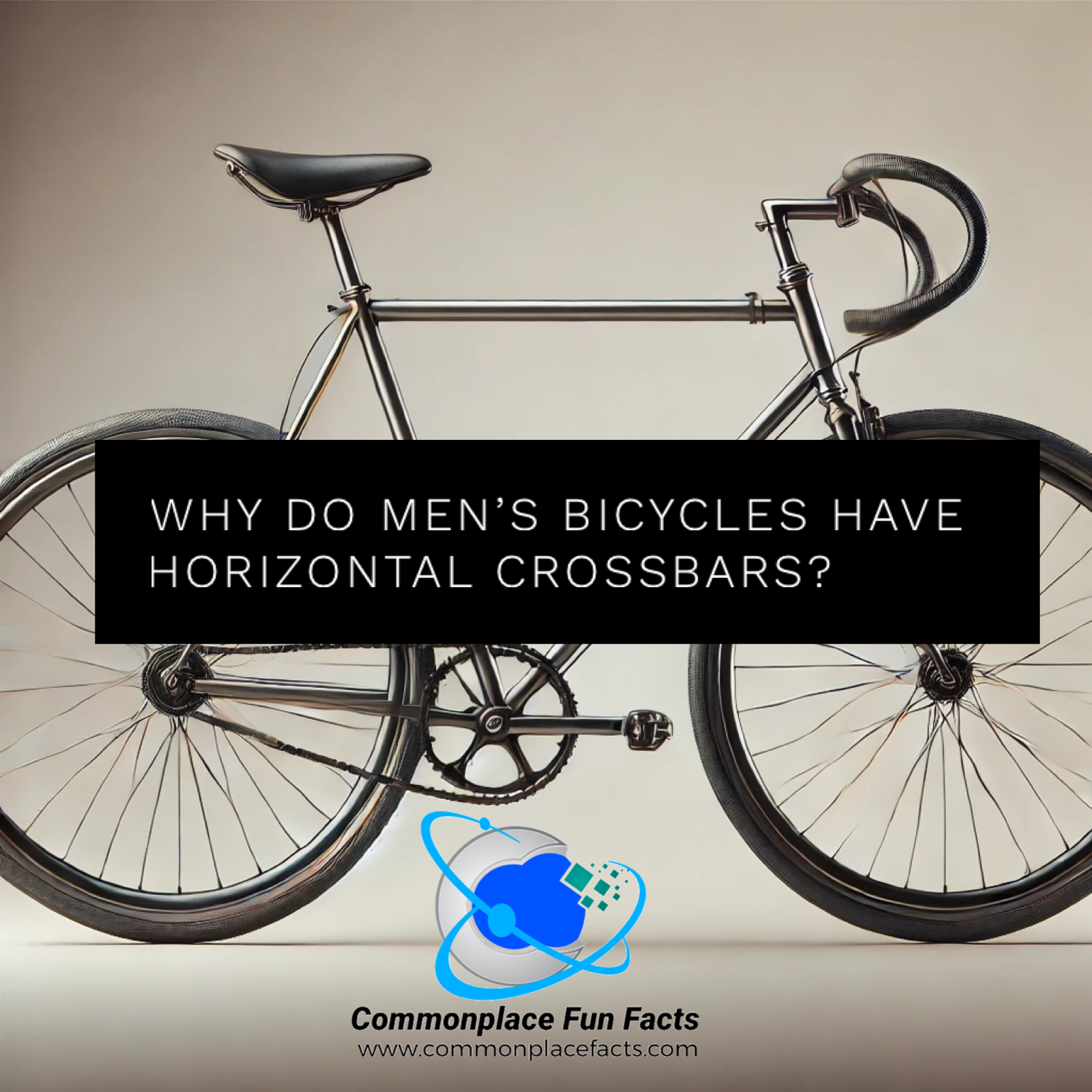

Learning How to Ride a Bike and Reliving the Pain of the Bicycle Horizontal Crossbar
Learning how to ride a bicycle is one of those rites of passage. We all look back at that time with memories of being a bit wobbly at first, feeling the excitement of realizing that no one is holding the bike for you and that you’ve actually figured this thing out, and the rush of adrenaline as you achieve speeds heretofore experienced only by Hermes himself.
And, of course, if you’re a guy, you also wince when you recall how often you slipped off the seat and got racked by the horizontal crossbar.
Contents
It is in moments like this that nearly every male has asked, “Why do men’s bikes have horizontal crossbars?” Women’s bikes, by contrast, have the ergonomically-friendly slanted crossbar that seems perfectly designed to minimize those voice-pitch-escalating moments of agony. Who came up with the custom? Why did anyone think that was a good idea? More importantly, why do we continue with the practice?

It turns out there’s a surprisingly logical (and historical) explanation behind this design choice—though logic doesn’t always save your dignity or, shall we say, other sensitive areas.
The Strength of the (Horizontal) Crossbar
To understand the mystery, we need to take a trip back to the early days of bicycle design. When bicycles were first invented, they weren’t the sleek, lightweight machines we know today. Instead, they were clunky contraptions made of wood or early metals that didn’t quite scream “durability.” The horizontal crossbar—running straight across the frame—wasn’t just an aesthetic choice. It was there to make the bike stronger.
Learn about the man who ate — among other things — 18 bicycles
In engineering terms, a horizontal crossbar adds rigidity and strength to the bike’s frame, helping it withstand the stresses of bumpy roads, aggressive pedaling, and the occasional crash. This was crucial in an era when bike materials weren’t exactly cutting-edge. Without that crossbar, the frame was prone to bending or even snapping under pressure, which would make for a very short and unpleasant ride.
So, why didn’t women have the same bicycle design for their bikes? Well, the answer lies in a delightful mix of 19th-century fashion and social mores.
The Scandal of Showing Some Ankle
Back in the day, women’s wardrobes were dominated by dresses and skirts—often long, flowing, and not particularly bike-friendly. Mounting a bike with a horizontal crossbar required a bit of leg-lifting acrobatics, which risked exposing ankles, legs, or, heaven forbid, undergarments. For context, this was an era when a glimpse of an ankle could set the town gossips aflutter.
To spare women the indignity of accidental leg exposure, bike makers came up with a solution: slanted crossbars. These angled frames made it easier for women to mount and dismount a bike with decorum intact. Sure, this design weakened the bike frame, but no one seemed to mind. After all, it wasn’t considered “ladylike” to take a bike on a vigorous mountain trail excursion.
Thus, the slanted crossbar became the standard for women’s bikes, even though it was a compromise in terms of structural integrity. Meanwhile, men’s bikes stuck with their horizontal bars, enjoying a stronger frame—and risking a lifetime of awkward tumbles and bruised — egos.
A Tradition That Stuck (Even When It Didn’t Need To)
Fast forward to the present, and you might think this distinction would have disappeared along with corsets and horse-drawn carriages. After all, most women today don’t ride bikes in floor-length dresses, and modern materials like carbon fiber and aluminum mean bike frames no longer need a horizontal bar for strength.
Yet the tradition persists. Most women’s bikes still feature slanted crossbars, even though there’s no practical reason for it anymore. Men’s bikes, meanwhile, continue to sport horizontal crossbars, despite the ongoing risk of, well, personal injury. Why? In a word: inertia. People like what they’re used to, and manufacturers tend to stick with bicycle designs that customers recognize.
That said, there’s been some progress. Many BMX bikes, for example, now feature slanted crossbars regardless of gender. This makes sense, as these bikes are designed for tricks and jumps where safety (and avoiding “racking” accidents) is a higher priority than tradition.
The Future of Bike Design: Form Meets Function
Interestingly, among high-end bicycles, the line between “men’s” and “women’s” bikes is starting to blur. Instead of focusing on crossbar orientation, manufacturers are designing bikes with ergonomics in mind. For example, women’s bikes may feature adjustments for shorter torsos, narrower shoulders, and different hip alignments—practical changes that improve comfort and performance.
Some of these high-end models even include horizontal crossbars on women’s bikes, since modern materials eliminate the old structural concerns. It seems that function is finally beginning to overtake outdated tradition. You can learn more about this and opportunities to get involved in cycling by visiting the International Mountain Bicycling Association website.
Pedal Your Way into Some Bicycle Fun Facts
As long as we’re on the subject of bikes, let’s take a detour into some fascinating bicycle trivia:
1. The Need for Speed:
The fastest speed ever recorded on a bicycle in an upright position (without external help, like downhill momentum or wind assistance) is a jaw-dropping 51.29 mph (82.52 km/h), achieved by Jim Glover in 1986. Meanwhile, the fastest speed ever recorded by a human-powered vehicle (a recumbent bike in this case) is 82.29 mph (132.449 km/h), set by Sam Whittingham in 2008. Imagine trying to explain that speeding ticket!
2. Bicycles Paved the Way for Cars:
Many of the technological advancements we take for granted in modern vehicles—like ball bearings, chain-driven sprockets, and pneumatic tires—were originally developed for bicycles. It’s no exaggeration to say that bikes helped shape the modern automobile.
3. Bikes Outnumber Cars:
There are an estimated one billion bicycles in the world today, compared to about 500 million cars. So, next time you’re stuck in traffic, remember: there’s a simpler, greener way to get around.
4. The First “Modern” Bicycle:
The bike as we know it—complete with a chain drive to the rear wheel—was invented in 1885 by J.K. Starley. His design, called the Rover, finally solved the problem of front-wheel-driven bicycles that were hard to steer and pedal simultaneously. In a way, Starley’s invention was the ancestor of every bike on the road today.
5. The Birth of the Pneumatic Tire:
The first practical pneumatic tire was invented by John Boyd Dunlop in 1888 for his son’s bicycle. His son had been plagued by headaches from the bumpy ride of solid rubber tires, so Dunlop’s invention not only revolutionized bikes but also laid the groundwork for modern tires in general.
Conclusion: A Lesson in Sticking With Tradition
The story of bicycle crossbars is a fascinating case study in how cultural norms and historical quirks can shape design—even when those norms no longer apply. While we’ve come a long way from the days of scandalous ankles and wooden bike frames, the horizontal crossbar remains a curious relic of a bygone era.
So, next time you hop on a bike, spare a thought for the engineers of old, the daring women who refused to let skirts hold them back, and the enduring power of tradition—even when it doesn’t quite make sense anymore. And if you’re riding a men’s bike? Maybe invest in some extra padding—just in case.
You may also enjoy…

A Warning for Women About the Dangers of Bicycle Face
Find out about Bicycle Face — a condition once feared among female cyclists.

The Vélo-Douche / Velocipede Shower Bath Lets You Pedal Your Way to Health and Cleanliness
Discover the whimsical Vélo-Douche/Velocipede Shower Bath, a quirky Victorian invention that combines a stationary bike with a shower bath. Learn how this ingenious device promised fitness, cleanliness, and a dose of steampunk charm, all powered by pedal power. Perfect for fans of oddball history and unique innovations!

Did Dr. Doom Help Design the Atomic Bomb?
Readers of Marvel Comics know that the nefarious Dr. Doom will go to any lengths in his power-hungry desire to conquer the world. It is worth taking a second look, therefore, to see if this master of villainy’s fingerprints were on the design of the most destructive weapon in history — especially since one of…






Leave a Reply