

Hector the Convector: He’s Not Thomas the Tank Engine’s Cousin
If you are a meteorologist and you get tired of people complaining about your accuracy rate, you might consider a change in locations. There is one place where you can rest assured that your prediction of “Watch out for a thunderstorm this afternoon” will always be proven right.
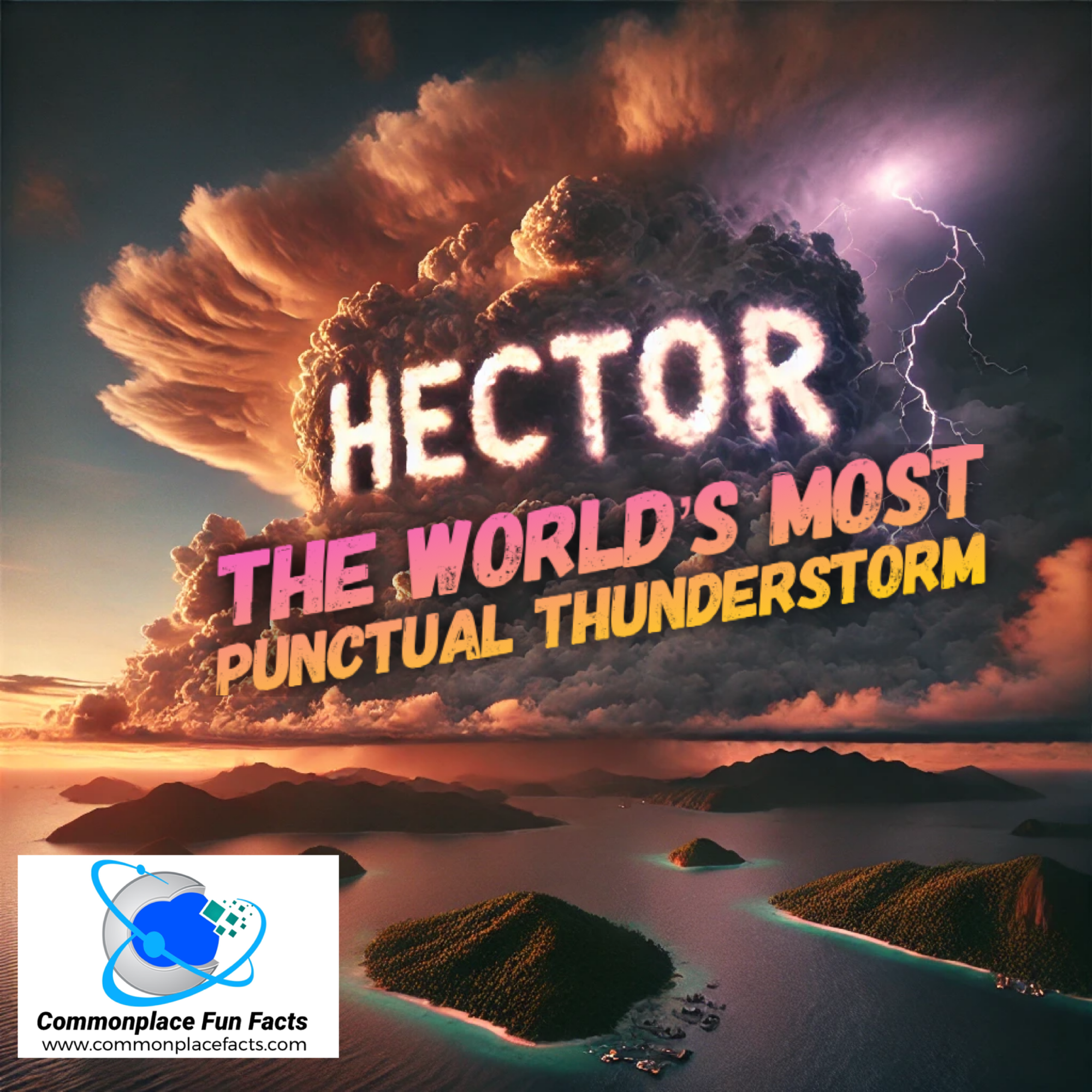
Allow us to introduce you to Hector the Convector. No, he’s not the distant cousin to Thomas the Tank Engine. Hector is a thunderstorm with the punctuality of a Swiss watch and the flair of a seasoned performer. Hector graces the skies above Australia’s Tiwi Islands with such regularity that you can set your watch — and get free shower — by its precision.
Contents
The Tiwi Islands: Hector’s Stage
Nature is — to put it mildly — really cool. Few things illustrate this as much as weather. Depending on where you live, you might experience weather that literally makes the days longer, or you could witness frogs or fish raining from the skies.
If you want to experience weather that works like clockwork, you’ll need to visit the Tiwi Islands. Nestled off the northern coast of Australia, the Tiwi Islands consist of Melville and Bathurst Islands, along with a sprinkling of smaller isles. These lands are home to the Tiwi people and boast a tropical monsoon climate, making them the perfect backdrop for Hector’s daily performances. The islands’ unique topography and climatic conditions set the stage for this meteorological marvel.
Hector’s Daily Debut

From September to March, like clockwork, Hector emerges each afternoon, reaching towering heights of approximately 20 kilometers (that’s about 65,000 feet for those keeping score). This thunderstorm isn’t just a fleeting spectacle; it’s a small mesoscale convective system or a large multicellular thunderstorm, depending on how fancy you want to get with meteorological jargon.
The Science Behind the Spectacle
You might wonder what fuels Hector’s unwavering consistency. The secret lies in the Tiwi Islands’ geography and the surrounding sea breezes. As the day heats up, sea breezes from all directions converge over the islands. This collision forces warm, moist air upward, giving birth to the majestic cumulonimbus clouds we lovingly call Hector. It’s like a daily atmospheric ballet, with the islands’ shape and the sun’s warmth choreographing the routine.
A Brief History of Hector
During World War II, pilots navigating the skies over the Northern Territory couldn’t help but notice Hector’s reliability. Serving as a natural beacon, this daily thunderstorm earned its name and became an integral part of wartime navigation. Since the late 1980s, meteorologists have been captivated by Hector, conducting numerous studies to understand its formation, lightning activity, and the unique microclimate of the Tiwi Islands.
Catching a Glimpse of Hector
For those eager to witness Hector’s grandeur, the best vantage points are from Darwin and nearby areas of the western Top End in the Northern Territory. Each afternoon, as the clock approaches 3 p.m., eyes turn northward to catch sight of Hector’s towering presence. Onlookers are often treated to a spectacular display of lightning as dusk settles in, making it a photographer’s dream and a testament to nature’s rhythmic beauty.
Hector’s Testimony to Nature’s Choreography
Hector the Convector isn’t just a meteorological phenomenon; it’s a testament to the intricate dance of nature’s forces. With unwavering regularity, Hector reminds us of the dynamic systems at play in our atmosphere and offers a daily spectacle for those fortunate enough to be in its presence. So, here’s to Hector—a storm with a schedule, a cloud with commitment, and a thunderous performer that never misses its cue.
For a visual treat, check out this time-lapse capturing Hector’s majestic formation over the Tiwi Islands:
You may also enjoy…

Can It Really Rain Fish?
Can the weather really cause it to rain fish? Uncover the surprising answer.

Frog Rain Phenomenon: The Science Behind Amphibians Falling from the Sky
Did frogs really fall from the sky in Kansas City and Dubuque? Discover the science behind the bizarre frog rain phenomenon and why it happens.

The Epic Legend of Eric Weatherhat: The King Who Controlled the Weather With His Hat
Explore the fascinating legend of Eric Weatherhat, a semi-mythical Viking king of Sweden, his weather-controlling hat, and his clash with Harold Fairhair. Uncover history, folklore, and daring escapes!




Leave a Reply