

An Exploration of Humanity’s Most Bizarre Easter Traditions
Easter is one of those holidays that, on paper, seems fairly straightforward (unless you’re trying to figure out when it next appears on the calendar). It is a deeply meaningful religious observance centered on themes of hope, resurrection, and new life.
Then humanity got involved.
What followed was a centuries-long accumulation of the most bizarre Easter traditions around the world: local traditions, cultural interpretations, and the occasional moment when someone, somewhere, made a decision that probably sounded better at the time. We’re talking about throwing water at people, smashing pottery, and using flying, candy-dropping mythology to explain the sudden silence of church bells.
The result is a global holiday that feels less like a unified celebration and more like something that emerged from a poorly-thought-through college party, where each region contributed its own idea and no one was assigned the role of asking whether any of them should be approved.
Let’s take a tour.
Contents
Water-Based Courtship (or: Romance, But With Buckets)
In parts of Eastern Europe, Easter Monday is less about quiet reflection and more about the sudden realization that you are about to get very wet.

In Poland, the tradition of Śmigus-Dyngus turns the day into a full-scale water assault. People throw water at one another using whatever tools are available, ranging from polite sprinkles to what can only be described as tactical deployment. Historically, this had roots in fertility customs and courtship rituals. Being soaked meant you were admired.
This sounds charming until you realize admiration may arrive in the form of a bucket.
Traditionally, the water-throwing aspect of Śmigus-Dyngus was carried out by boys, who would drench girls as a sign of interest—a system of courtship that sounds suspiciously like teenage boys trying to flirt, but doing so in a spectacularly unromantic way. The underlying message may have been “I like you,” but the delivery method was closer to “prepare to be soaked without warning,” which, while memorable, is not generally listed among history’s great romantic gestures.
Hungary offers a slightly more refined version of the same basic concept. There, the tradition known as Locsolkodás involves men reciting short poems before sprinkling women with perfume—or, in earlier times, water. The women then reward them with decorated eggs.
Both traditions share a common origin in spring fertility rites, which explains the focus on water, renewal, and social interaction. The key difference is presentation. Poland leans toward aquatic chaos. Hungary prefers a system that at least makes a brief attempt at poetry and improving the aroma before the soaking begins.
One might say Hungary is what happens when you add etiquette to a bucket.
Things That Fall From the Sky (None of Them FAA Approved)
In France, Easter comes with a logistical detail that deserves more scrutiny than it receives.
Children are told that church bells fly to Rome on Good Friday to be blessed. They then return on Easter Sunday, dropping eggs and chocolate along the way.

This explanation exists because church bells traditionally fall silent during that period. Rather than explain liturgical symbolism to children, someone decided it would be easier to suggest that the bells had taken a short international trip.
The nation collectively agreed this was a reasonable solution.
Germany, meanwhile, does not send objects into the sky, but it does light large Easter bonfires known as Osterfeuer. These fires symbolize the end of winter and the triumph of light over darkness.
The connection between the two traditions is subtle but real. Both are rooted in older seasonal practices tied to the transition from winter to spring. France sends bells on a journey. Germany sets something on fire. Both approaches communicate renewal. One just involves less air traffic.
It is also worth noting that neither tradition involves a rabbit, which feels like a missed opportunity for consistency.
Breakable Objects and Cathartic Destruction
If your idea of a meaningful holiday includes controlled chaos and the destruction of household items, Greece has you covered.

On the island of Corfu, residents celebrate Easter Saturday by throwing clay pots out of windows and smashing them on the street below. This tradition, known as Botides, creates a scene that is equal parts celebration and insurance adjuster’s worst nightmare.
Much like the South African New Year’s Day tradition of throwing things out of the window, the symbolism is generally understood as casting off the old and welcoming the new. It is spring cleaning, but with more gravity and a larger audience.
While this may seem unique, it shares a philosophical connection with other Easter traditions. Just as water rituals symbolize renewal and bonfires represent the end of winter, smashing pottery offers a more direct approach to the same idea.
Some cultures gently welcome change. Others throw it out the window.
Costumes, Witches, and Mild Seasonal Identity Confusion
In Finland and Sweden, Easter takes a turn that feels as if someone accidentally turned the calendar’s date to Halloween.

Children dress up as witches, go door-to-door, and exchange small gifts or drawings for candy. In Finland, they often carry decorated willow branches. In Sweden, they may present handmade artwork.
The roots of these traditions lie in folklore about witches traveling to mythical places during Easter. Naturally, the logical response to this belief was to dress children as witches and send them into the neighborhood.
This creates a fascinating overlap between two holidays that, on the calendar, are nowhere near each other. The key difference is tone. Halloween leans into the spooky. Easter witches tend to be more cheerful, as though they have decided that if they are going to participate in folklore, they might as well enjoy it.
It is essentially Halloween with better lighting and fewer complaints about curfew.
Somber Processions and Unexpected Visual Choices
Spain offers a reminder that not all unusual traditions are lighthearted.

During Holy Week, elaborate processions known as Semana Santa take place across the country. Participants wear traditional robes and tall, pointed hoods called capirotes, which have deep historical and religious significance.
To those unfamiliar with the tradition, the visual effect can be surprising, if not slightly disorienting. Context matters here, as these processions are solemn, reflective, and rooted in centuries of devotion.
This is one of the clearest examples of how Easter traditions can vary not just in activity, but in tone. While some countries lean into playful or chaotic expressions of the holiday, others emphasize reverence and continuity with the past.
Both approaches coexist, occasionally within the same continent, and sometimes within the same long weekend.
Murder Mysteries and Milk Cartons
Norway, in a move that no one saw coming but everyone accepted, has turned Easter into crime season.

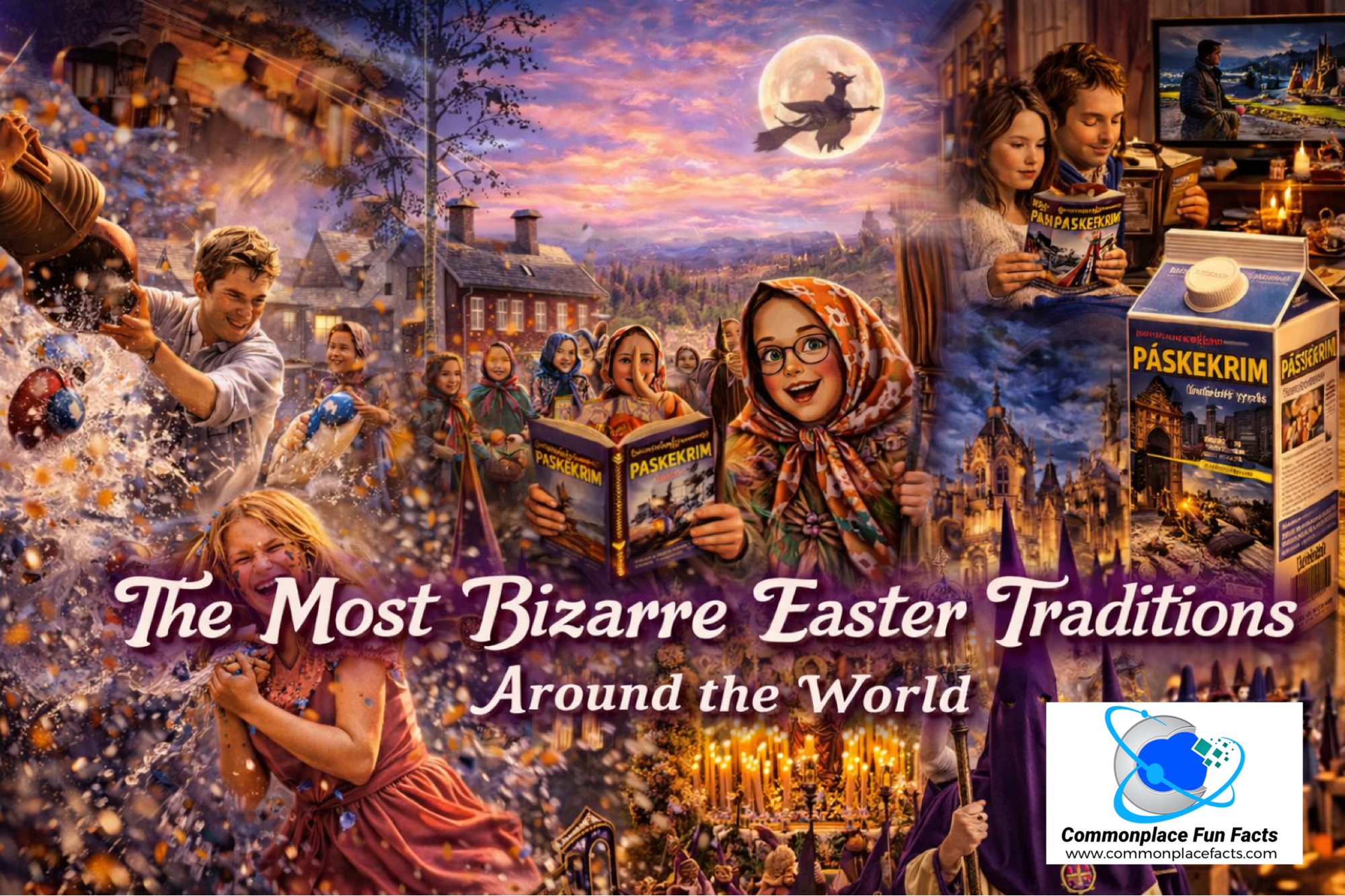
The tradition of Påskekrim involves reading detective novels, watching crime dramas, and generally immersing oneself in fictional investigations. Publishers release new mysteries specifically for the holiday. Even milk cartons may feature short crime stories.
This tradition originated from a clever marketing campaign in the early 20th century and has since become a national pastime.
It does not share obvious thematic connections with water rituals, bonfires, or flying bells, which may be part of its charm. While other countries focus on renewal, Norway asks the important question: “But who did it?”
It is difficult to argue with a tradition that combines time off work with solving imaginary murders.
A Holiday That Refuses to Be Just One Thing
What becomes clear after surveying these traditions is that Easter is remarkably adaptable.
At its core, it remains a deeply significant religious observance. Around that core, however, cultures have layered their own customs, symbols, and interpretations, often drawing from older seasonal celebrations that predate the holiday itself.
The result is a global patchwork of traditions that range from solemn to absurd, sometimes within the span of a single day.
In one part of the world, people gather quietly for reflection. In another, they are dodging incoming water balloons. Elsewhere, bells are allegedly returning from Rome with chocolate, and someone is reading a crime novel while waiting for the answer.
None of it is entirely logical, yet all of it makes perfect sense—once you accept that holidays, like people, are rarely consistent and almost always more interesting because of it.
You may also enjoy…

When is Easter? Why Easter Never Falls on the Same Day (Blame the Moon and a 4th-Century Meeting)
When is Easter and why does it change every year? Discover how lunar cycles, the spring equinox, and a 4th-century church council determine the date—explained simply with a touch of humor.

The World’s Strangest New Year’s Traditions: Humanity’s Attempt to Bribe Time
Explore the world’s strangest New Year’s traditions—from grapes and bells to fireballs and furniture—plus what they reveal about humanity’s annual attempt to bribe time.

The Weird Foods of the World: You Ate What?
Discover the world’s weird foods—from dancing squid to fermented shark and maggot-infested cheese. Explore bizarre global delicacies that are equal parts fascinating and stomach-churning.







Leave a Reply to ScottCancel reply