

Movie stars are paid large sums of money for many reasons: charisma, box office appeal, stunt work, brand recognition, and, occasionally, the rare talent of saying almost nothing while still earning enough money to purchase a small island with luxury accommodations for the entire entourage.
Most of us are paid by the hour, by the task, or by the grim institutional fiction known as “salary.” Actors, however, live in a more magical economy. A performer can be paid millions of dollars for a role, then spend much of the film glaring, brooding, punching, smirking, or standing beside a fog machine while the orchestra does the emotional heavy lifting.
That raises an important question, at least for those of us who enjoy taking entertainment trivia and subjecting it to unnecessary mathematical indignities: when looking at actor salary per word, which actor’s words are worth the most?
Back in 2018, we looked at this very question in “Which Actor’s Words Are Worth the Most?” That article identified some astonishing examples of Hollywood efficiency, including Arnold Schwarzenegger, Johnny Depp, Keanu Reeves, and Jack Nicholson. Since then, the movie industry has changed. Streaming has rewritten compensation. Backend deals have become more mysterious. Theatrical windows have shrunk, expanded, exploded, reassembled themselves, and then been handed to a consultant.
And then came John Wick: Chapter 4, in which Keanu Reeves reportedly spoke only 380 words across nearly three hours of lovingly choreographed mayhem. Suddenly, it seemed like time to reopen the file.
Contents
How Do You Measure an Actor’s Words?
The basic idea is simple: take an actor’s compensation for a movie and divide it by the number of words the actor speaks. The result is a per-word figure that makes ordinary employment feel like a prank.
Simple, however, is not the same as clean. Hollywood compensation is a swamp wearing sunglasses. See “The Hollywood Accounting Scam: How Blockbuster Movies Make Millions but Lose Money” for our analysis of the creative accounting that plagues the entertainment industry.
Aside from the accounting issues, there are other complications that make our task difficult. One actor may receive a fixed salary. Another may accept a smaller upfront payment in exchange for a percentage of the profits. Another may get bonuses tied to box office performance. Another may be paid as actor, producer, executive producer, brand ambassador, and possibly spiritual guardian of the franchise.
Then there is the question of word count. Should we count words from the screenplay? The final theatrical cut? Deleted scenes? Improvised dialogue? Grunts? Does “Whoa” count as one word or as a complete Keanu Reeves philosophical system?
The earlier rankings were based largely on reported salaries and screenplay dialogue counts. That is good enough for trivia, but not good enough for a sworn affidavit, which is probably for the best because no judge wants to spend a Tuesday deciding whether Batman villain laughter is compensable dialogue.
The Old Champion: Jack Nicholson as the Joker
When we first examined the question, Jack Nicholson’s Joker in 1989’s Batman was sitting on the throne. And not a modest throne, either. This was a throne with purple upholstery, theatrical lighting, and a suspiciously high dry-cleaning bill.
Nicholson reportedly spoke only 585 words in the film. Because of his famously lucrative deal, his compensation was calculated at approximately $94,244,085, producing an absurdly elegant total of about $166,101 per word.
That means when Nicholson’s Joker said, “This town needs an enema,” the line was worth roughly $830,505. Most people would say that sentence for free, although admittedly with less face paint and fewer exploding parade balloons.
The Nicholson deal is legendary because it was not merely a paycheck. He reportedly took a reduced salary in exchange for a piece of the action, including box office and merchandising participation. That decision turned out to be one of the great business moves in entertainment history. The Joker may have been chaotic, but Nicholson’s contract strategy was more carefully engineered than a Swiss watch with a profit-sharing clause.
The Other Members of the “Paid to Say Very Little” Club
Before we bring in the newer contenders, it is worth revisiting the old leaderboard. These numbers are the kind that make you look at your own sent emails and wonder why you have not monetized “Thanks, just circling back.”
| Actor | Role / Movie | Reported Word Count | Estimated Pay Per Word |
|---|---|---|---|
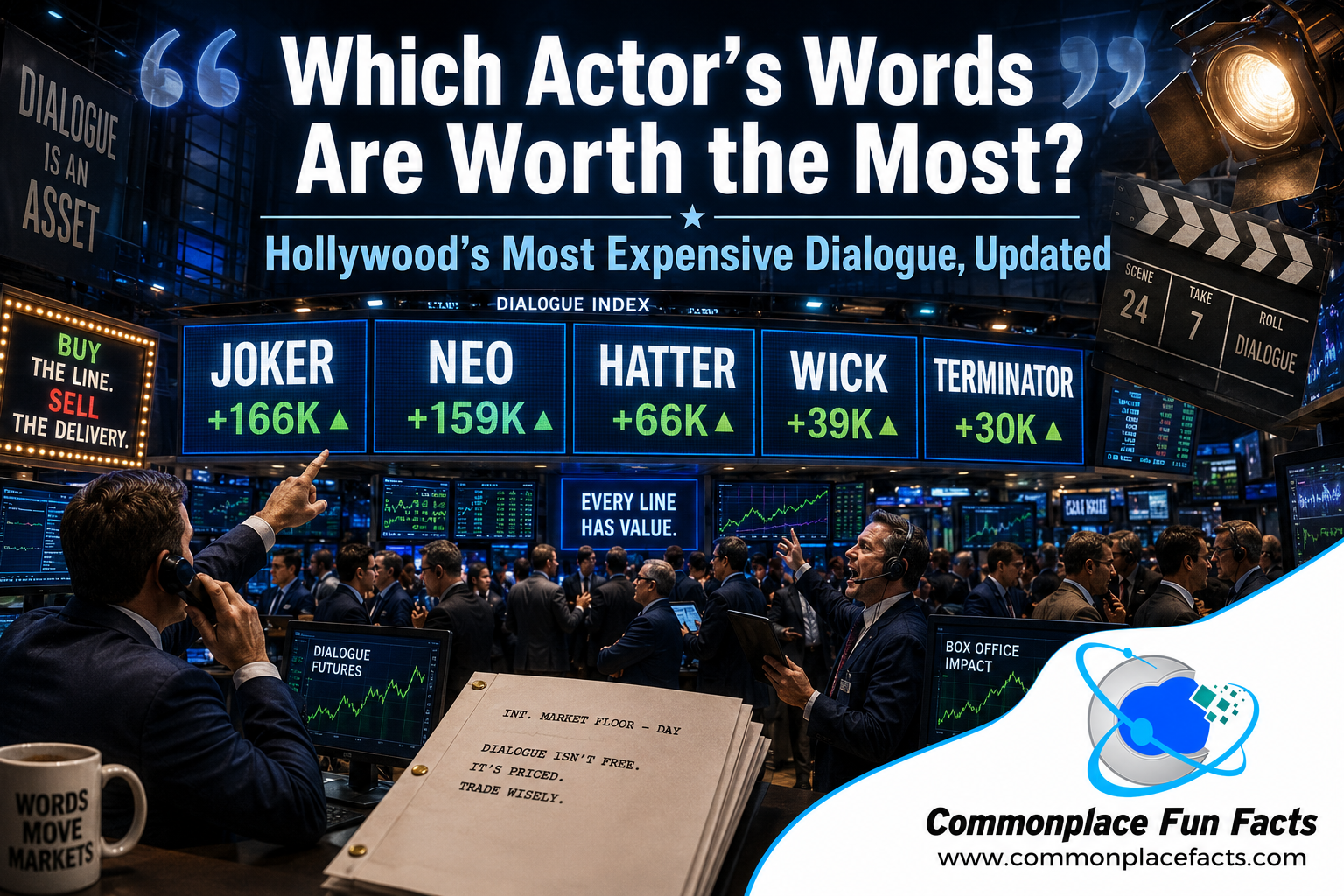
| Jack Nicholson | The Joker, Batman | 585 | $166,101 |
| Keanu Reeves | Neo, The Matrix Reloaded and The Matrix Revolutions | 638 | $159,393 |
| Johnny Depp | The Mad Hatter, Alice in Wonderland | 661 | $66,606 |
| Arnold Schwarzenegger | The Terminator, Terminator 2: Judgment Day | 861 | $30,687 |
These are not merely large salaries. These are large salaries filtered through the magic of cinematic minimalism. Arnold Schwarzenegger earned a fortune for playing a killing machine who communicated mostly through ominous pauses and Austrian menace. Johnny Depp made the Mad Hatter’s eccentric ramblings extraordinarily efficient. Keanu Reeves, as Neo, managed to turn existential confusion into a major income stream.
But even among this elite group, Nicholson’s Joker remained the measuring stick. Everyone else was playing checkers. Nicholson was playing chess, poker, roulette, and a merchandising contract.
Enter John Wick, the Patron Saint of Economical Dialogue
Then came John Wick: Chapter 4, a movie that runs nearly three hours and features approximately seven thousand beautifully composed ways for people to have a terrible day. Despite all that screen time, John Wick himself reportedly speaks only 380 words.

This is not 380 lines. This is 380 words. Many people use more than that when ordering at a coffee shop, especially if the word “soy” is involved.
Reeves’ reported salary for the film has been widely cited at about $15 million. If that figure is correct, then his pay breaks down to approximately:
$15,000,000 ÷ 380 words = $39,474 per word
That is not enough to dethrone Nicholson’s Joker. It is not enough to pass Reeves’ own Neo figure from the Matrix sequels. But it does put John Wick comfortably into the upper ranks of Hollywood’s paid-by-the-syllable aristocracy.
It also proves that Keanu Reeves may be the only actor in movie history to build two different franchises around the concept of saying very little while everyone around him overexplains the mythology. In The Matrix, people explained reality to him. In John Wick, people explained assassin bureaucracy to him. In both cases, Reeves mostly responded with the face of a man who had read the employee handbook and understood it better than the HR folks.
Unquestionably, the dollars-per-word amount for John Wick: Chapter 4 is impressive, but then the body count walks into the room wearing body armor and carrying a pencil. If we use the 151-kill tally attributed to John Wick in the film, Reeves earned roughly $99,338 per cinematic dispatch. In other words, in John Wick: Chapter 4, violence was more than twice as profitable as dialogue. He said about 2.5 words for every person he killed, which makes John Wick: Chapter 4 less a screenplay than a revenge ballet performed in honor of a very good dog.
Where John Wick Lands on the Updated List of Actor Salary Per Word
If we accept the reported salary and word count, John Wick: Chapter 4 likely slides into the upper tier. It does not change the champion, but it does give the old list a new heavyweight contender.
| Actor | Role / Movie | Estimated Pay Per Word | |
|---|---|---|---|
| 1 | Jack Nicholson | The Joker, Batman | $166,101 |
| 2 | Keanu Reeves | Neo, The Matrix Reloaded / The Matrix Revolutions | $159,393 |
| 3 | Johnny Depp | The Mad Hatter, Alice in Wonderland | $66,606 |
| 4 | Keanu Reeves | John Wick, John Wick: Chapter 4 | $39,474 |
| 5 | Arnold Schwarzenegger | The Terminator, Terminator 2: Judgment Day | $30,687 |
This updated ranking comes with a large, flashing caveat sign. The older numbers were calculated using one methodology. The John Wick number comes from a reported word count and a reported salary. Mixing those together is perfectly acceptable for a fun article and absolutely unacceptable for a doctoral dissertation, unless the dissertation committee has given up completely.
Still, it is close enough to make the point: John Wick speaks like every word has to be approved by accounting.
What Happens When We Adjust the Numbers for Inflation?
Of course, a dollar in 1989 was not the same as a dollar today. This is because money, like movie franchises, gradually expands until no one is entirely sure how we got here.
So what happens if we take the top “paid per word” figures and adjust them into approximate 2026 dollars? The answer is that the numbers become even more ridiculous, which is impressive because they were already standing on the balcony waving a cape.

Using inflation-adjusted estimates, Jack Nicholson’s Joker still holds the top spot. His already-ludicrous figure of about $166,101 per word becomes approximately $202,815 per word in 2026 dollars. That means one Nicholson Joker word is now worth more than many houses, several college degrees, or about one-tenth the value of a high-grade copy of Batman #1.
Keanu Reeves as Neo remains close behind. His Matrix sequel figure rises from about $159,393 per word to roughly $194,624 per word. This is appropriate, since the entire point of The Matrix is that reality is fake, and few things feel less real than earning nearly $200,000 every time you say “Whoa,” “Trinity,” or something spiritually adjacent to confusion.
Johnny Depp’s Mad Hatter climbs to about $81,328 per word, while Keanu Reeves’ newer John Wick number lands around $42,868 per word. Arnold Schwarzenegger’s Terminator figure rises to approximately $37,470 per word, which is still a spectacular return on phrases such as “I’ll be back,” even if your own attempt to say that at work merely results in someone remarking that they didn’t realize you were there in the first place.
| Actor | Role / Movie | Estimated Pay Per Word in 2026 Dollars |
|---|---|---|
| Jack Nicholson | The Joker, Batman | $202,815 |
| Keanu Reeves | Neo, The Matrix Reloaded / The Matrix Revolutions | $194,624 |
| Johnny Depp | The Mad Hatter, Alice in Wonderland | $81,328 |
| Keanu Reeves | John Wick, John Wick: Chapter 4 | $42,868 |
| Arnold Schwarzenegger | The Terminator, Terminator 2: Judgment Day | $37,470 |
The inflation adjustment does not change the overall winner. Nicholson still reigns. Reeves still manages to appear twice, which is either a remarkable acting achievement or proof that Hollywood has discovered the financial value of letting Keanu communicate primarily through cheekbones, grief, and excellent posture.
What inflation does change is the emotional damage. It is one thing to say an actor earned $30,000, $60,000, or $160,000 per word. It is another to translate those figures into today’s money and realize that a single line of dialogue from a major star can be worth more than a luxury car, a year of private college tuition, or the GDP of a small nation.
In other words, the updated math confirms the original lesson: in Hollywood, talk is not cheap. But silence, when properly negotiated, is apparently where the real money lives.
Why Modern Hollywood Makes This Harder
In the old days, measuring an actor’s salary was already complicated. Today, it is like trying to weigh fog while being sued by a streaming platform.

Movie stars are no longer paid only for showing up, hitting their marks, and pretending not to notice that the monster is a tennis ball on a stick. Their compensation may include salary, bonuses, backend participation, producer fees, streaming buyouts, franchise options, and contractual arrangements known only to agents, studio lawyers, and possibly a few magical messenger owls.
Take Tom Cruise. His compensation for Top Gun: Maverick has been reported at more than $100 million because of his backend deal. That is a staggering number, even by Hollywood standards, which is an industry where “staggering number” usually refers to either budgets or how many sequels have been made to Scary Movie.
Then there is Margot Robbie in Barbie. Her compensation has been reported in the neighborhood of $50 million when salary and bonuses are included. But she was not merely the star. She was also a producer, and Barbie was not exactly a minimalist exercise in silent cinema. Barbie talks. Barbie reflects. Barbie questions existence. Barbie carries more emotional exposition than some graduate seminars.
That does not make Robbie’s payday less impressive. It just makes it hard to compare with an actor who is paid only for appearing onscreen and saying a finite number of words. Once producer compensation enters the room, the per-word calculation starts wearing a fake mustache.
The Groot Problem
No discussion of expensive movie words can avoid the great leafy elephant in the room: Vin Diesel as Groot.

For years, the internet has cheerfully repeated versions of the claim that Vin Diesel made an enormous amount of money for saying “I am Groot.” It is the kind of factoid the internet loves because it sounds ridiculous, confirms what people already suspect about celebrity wealth, and can be understood without reading past the headline. In other words, it is genetically engineered for social media.
The problem is that the biggest versions of the claim have been publicly disputed. That does not mean Diesel’s Groot work was insignificant. Voice acting is acting. Groot’s repeated phrase required different emotional readings, and Diesel reportedly recorded the line in multiple languages. There is skill involved in making a sentient tree sound noble, wounded, funny, loyal, and mildly splintered.
But until there is reliable compensation data and a clearly defined word count, Groot belongs in the honorable mention section rather than the leaderboard. Also, if we start counting every repeated “I am Groot” as separate words, we may accidentally create a mathematical forest fire.
Why Quiet Characters Are So Valuable
The most interesting part of this question is not really the money. Well, it is a little bit the money. It is very much the money. But underneath the financial absurdity is a storytelling truth: some characters are powerful because they do not say much.
The Terminator does not need to explain himself. He is a robot assassin from the future. If he starts delivering speeches about his inner life, something has gone terribly wrong, probably in both the script and the timeline.
John Wick does not need to narrate his feelings. The dead dog, the black suit, the nightclub lighting, and the alarming number of people being thrown into display cases have already established the mood.
Neo spends much of the Matrix films being told what everything means, which is understandable because everyone in those movies talks like they are auditioning for a philosophy department trapped inside a leather store.
The Joker, meanwhile, does not need a large word count because Nicholson understood something essential about theatrical villainy: sometimes a grin, a pause, and a hat can do the work of a monologue. Especially if the hat has its own lighting designer.
Silence Pays, But Only If You Are Already Famous
Before anyone decides to improve their own earning potential by refusing to speak at work, a warning is necessary. Silence is profitable only after you have already become a globally recognized movie star. If you are not Jack Nicholson, Keanu Reeves, Arnold Schwarzenegger, or Johnny Depp, silently staring at your supervisor is unlikely to produce a backend deal.
Hollywood pays for scarcity. A movie star’s few words are valuable because the audience already brings meaning to the actor’s face, reputation, history, and screen presence. Keanu Reeves can say “Yeah” and audiences understand grief, resolve, loyalty, exhaustion, moral code, and possibly the entire plot of three prior films. If the rest of us say “Yeah” with that much silence around it, someone asks whether we should be monitoring our blood sugar.
This is why per-word salary rankings are so fascinating. They do not measure acting quality directly. They measure leverage. The actor is not being paid merely for the words. He or she is being paid for what the audience feels before, during, and after the words arrive.
So Who Wins?
For now, the crown still appears to belong to Jack Nicholson as the Joker. His combination of low word count, legendary screen presence, and wildly successful compensation deal remains hard to beat.
Keanu Reeves, however, deserves special recognition. He appears twice in the upper reaches of the list: once as Neo and once as John Wick. That means Reeves has become one of the most efficient talkers in movie history. This is especially impressive for an actor whose career includes time travel, simulated reality, assassin hotels, demonic lawyers, and a bus that could not slow down without becoming a citywide insurance event.
John Wick’s 380 words did not dethrone the Joker, but they did update the conversation. The modern Hollywood economy may be messier, more opaque, and more streaming-shaped than it was in 2018, but the basic principle remains the same: the fewer words a major star says, the more financially ridiculous each one becomes.
Most of us will never earn $166,101 for a single word. We will never earn $39,474 for saying “Yeah.” We will never be paid millions to glare at a room full of assassins while everyone else politely waits for us to finish reloading.
But at least now we know the true lesson of Hollywood economics: talk may be cheap, but silence requires a much better agent.
Reader-submitted chaos deserves recognition here. As our esteemed colleage Scott from In the Shadow of Yesterday, pointed out, in Willy’s Wonderland, Nicolas Cage stars as a silent janitor fighting possessed animatronic mascots in what can only be described as “Five Nights at Freddy’s meets unpaid facilities maintenance.” Cage reportedly does not speak a single word in the film, which means his actor salary per word cannot be calculated in the normal way. If the circulated $4 million fee is accurate, then Cage did not merely top the leaderboard; he broke the machinery. Dividing salary by zero words produces an undefined result, which feels appropriate for a film in which Nicolas Cage silently beats the stuffing out of demonic children’s entertainment robots. Pending better salary confirmation, Cage belongs in a special honorary category: Most Money Earned While Saying Absolutely Nothing.
You may also enjoy…

The Hollywood Accounting Scam: How Blockbuster Movies Make Millions but Lose Money
Discover how Hollywood accounting turns billion-dollar blockbusters into “losses.” Learn the tricks studios use to avoid paying profits and why hit movies often show no net income on paper.

The Wizard of Oz Cast Salaries and the Surprising Payout Along the Yellow Brick Road
What The Wizard of Oz cast salaries? Find out how much each of the stars made for this movie classic prepare to be surprised about who earned the most.

The Highest Paid Dog: Whose Bark is Worth the Most Bucks?
Which canine celebrity do you think is the highest paid dog in show business?



Leave a Reply