
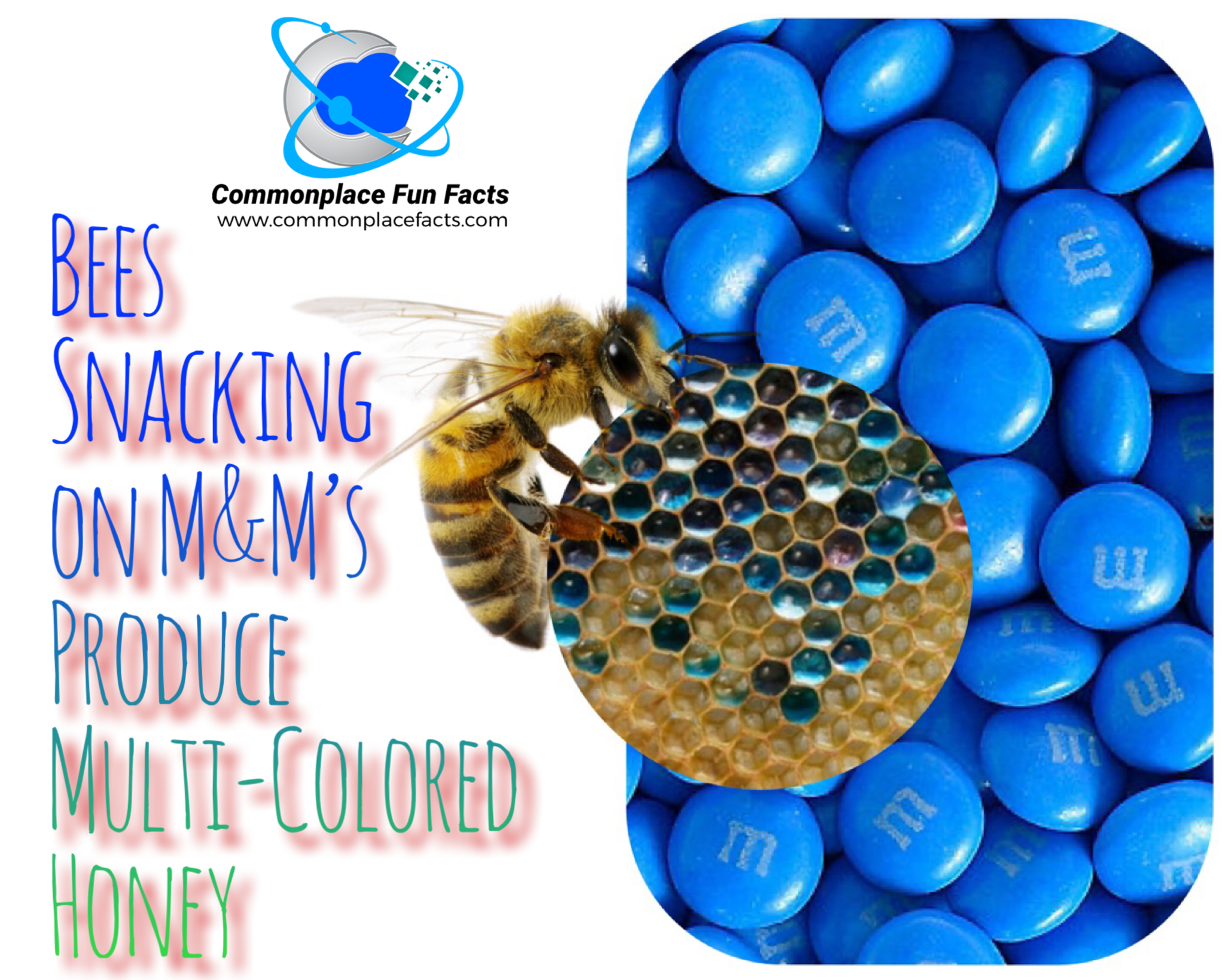

If you are feeling a bit blue, there’s nothing like a little honey to cheer you up. What do you do if the honey itself is blue?
Blue honey is causing some French beekeepers to see red. In August of 2012, beekeepers near Ribeauville in northeastern France began to notice a peculiar and troubling thing about their honey. It was turning colors. Instead of the golden color everyone associates with the delicious foodstuff, the honey coming out of their hives was blue, green, and brown.
Obviously concerned about what could be causing the peculiar development, beekeepers began an investigation. Their search led them to a nearby waste processing facility. One of its biggest customers was a Mars chocolate factory in Strasbourg that produces M&M candy. The bees had been supplementing their diets with the leftover multi-colored shells of M&M’s.

There are times when beekeepers intentionally influence the color of honey. They do this by infusing the honey with dried fruit powder or when making flavored creamed honey or honey sticks. Otherwise, the quality of natural honey is assessed by its color. The M&M-influenced colored honey may have tasted the same as its naturally-colored counterpart, but it was unsellable.
A similar situation happened in Brooklyn, New York in 2010 when bees started producing garishly bright honey. The culprit that time turned out to be Red Dye No. 40 from the Dell’s Maraschino Cherries Company.
In reporting the Brooklyn incident, the New York Times article asked, “Could the tastiest nectar, even close by the hives, compete with the charms of a liquid so abundant, so vibrant and so cloyingly sweet? Perhaps the conundrum raises another disturbing question: If the bees cannot resist those three qualities, what hope do the rest of us have?”
One word of caution: it isn’t just M&Ms that can give honey peculiar qualities. Read this article to learn how the pollen of certain flowers can produce hallucinogenic stuff known as “mad honey.”
You may also enjoy…

Mad Honey Warfare: The Strange History of Hallucinogenic Honey in Battle
Discover mad honey—how toxic rhododendron nectar creates hallucinogenic honey used in ancient warfare, medicine, and modern curiosity.

The Honey War of 1839: When Missouri and Iowa Nearly Went to War Over Honey
Discover the Honey War of 1839, the bizarre border dispute that nearly sparked a war between Missouri and Iowa over a surveying error and trees full of honey.

What’s the Buzz About the McDonald’s Built for Bees?
Those who follow the news about fast food, architecture, and apiology were all abuzz with a development that was as sweet as honey. Sweden recently opened the doors to the world’s smallest McDonald’s. It is not only the tiniest, but it is also the most exclusive in terms of clientele: it only serves bees. Outwardly,…




Leave a Reply