
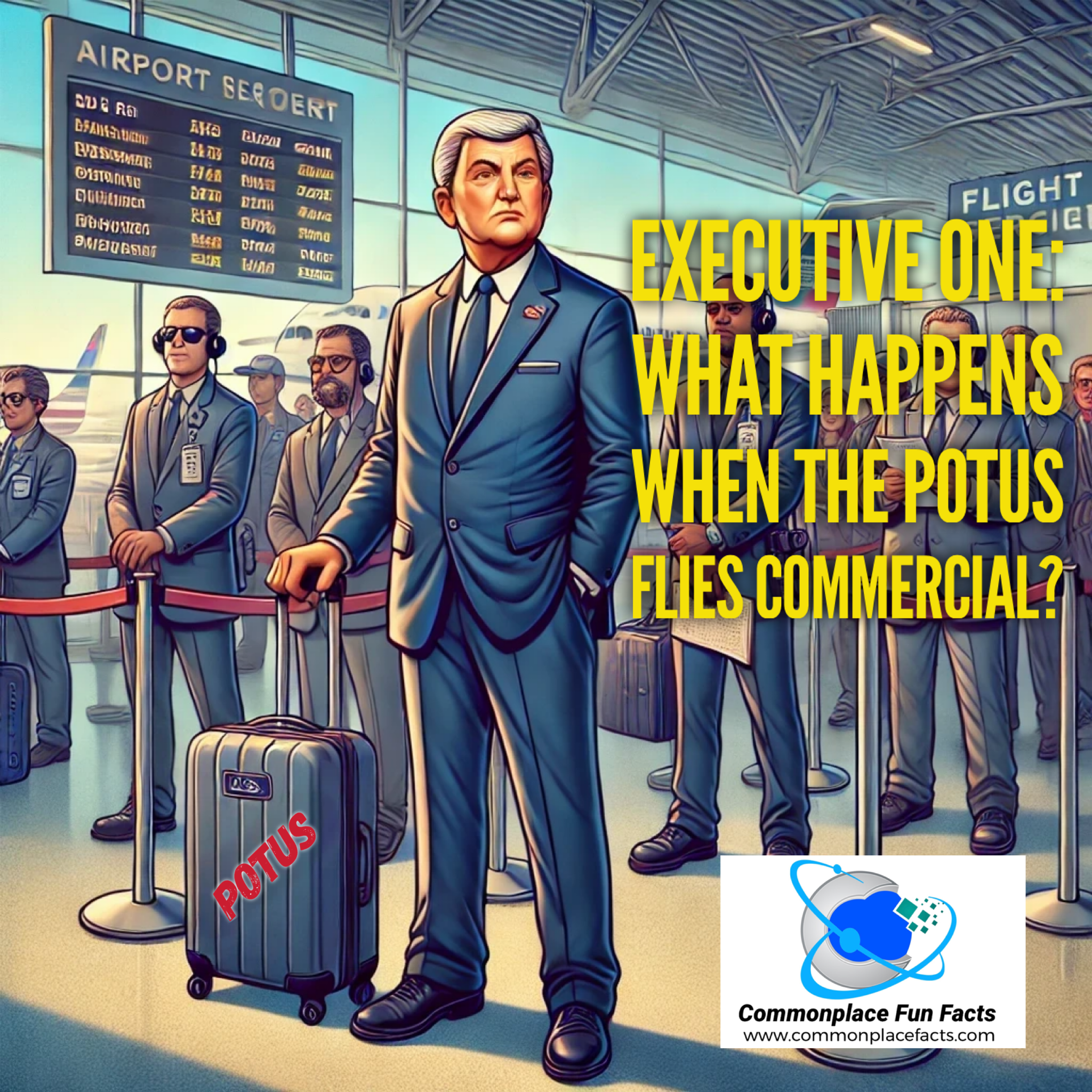

How to Fly Like You’re the Commander-in-Chief
If you’re an aviation enthusiast (or just someone who watches a lot of action movies), you probably know that whenever the President of the United States is aboard a U.S. Air Force aircraft, that plane automatically assumes the callsign Air Force One. For decades, this title has been most commonly associated with a pair of highly modified Boeing 747-200s, known in military circles as the VC-25A—a duo of iconic blue-and-white jets that shuttle the leader of the free world through the skies.
Contents
A similar rule applies to helicopters. If the President is hitching a ride on one of those, the aircraft takes on the callsign Marine One. But like any rule, there are exceptions. And because nothing about U.S. presidential travel is ever boring, there exists another, rarer callsign that comes into play when the Commander-in-Chief decides to mix things up and fly non-military—the elusive Executive One.
Yes, it has happened. A sitting U.S. President has traded in military-grade security and a flying Oval Office for a seat on a commercial aircraft. When that happened, and if it happens again, the plane in question temporarily gets a fancy new title.
Let’s take a look at the short, but fascinating history of Executive One—a callsign that is as rare as an on-time flight.
Wait, What’s Executive One?
Ordinarily, the President sticks to military aircraft for obvious reasons—namely, security, convenience, and the small matter of not wanting to be stranded at an airport waiting for a delayed connection in Denver. The aircraft that operate as Air Force One are equipped with state-of-the-art surveillance, communication, and defensive systems. Those planes aren’t just presidential transport—they’re flying fortresses.
Presidential travel is handled by the Presidential Airlift Group, which operates aircraft across multiple branches of the military. Most commonly, this means the Air Force’s VC-25As and the Marines’ fleet of helicopters. But should the President decide to mix things up, we could hear other callsigns. Army One is used when POTUS is on board an Army aircraft. Before the Marines took over helicopter operations, Army One was a common sight on the White House lawn. When the Navy provides transportation — that has only happened once — that plane would be known as Navy One. Thus far, there have been no aircraft with the callsign Coast Guard One. And we can’t wait to see what Space Force One will look like.
Now, here’s where things get interesting: If the President boards a civilian aircraft, that plane doesn’t magically become Air Force One. Instead, it’s designated Executive One. Similarly, if the Vice President is on a civilian plane, it’s Executive Two.
Because the government loves a good phonetic alphabet designation, there’s even a callsign for the First Family: If the President’s spouse and children are on a civilian aircraft, the callsign Executive One Foxtrot is used—the “Foxtrot” signifying “family.”
But when has a sitting President ever used Executive One? Well, that brings us to one of the strangest moments in presidential aviation history.
That Time Nixon Flew Commercial (Yes, Really)
On December 26, 1973, Richard Nixon made history. On that day, he became the first sitting U.S. President to take a commercial flight.

The backdrop? A nationwide energy crisis that had airlines struggling under the weight of soaring fuel prices. Nixon’s grand idea to show solidarity? Ditching Air Force One in favor of a good ol’ fashioned commercial flight. Specifically, United Airlines Flight 55, a McDonnell Douglas DC-10 making a routine transcontinental trip from Washington Dulles (IAD) to Los Angeles (LAX).
Of course, this wasn’t just Nixon casually browsing Expedia for the best rates. The White House carefully selected the flight because it was underbooked, meaning the President and his entourage wouldn’t have to cram into the middle seat next to a guy eating an egg salad sandwich.
Along for the ride? First Lady Pat Nixon, their daughter Tricia, and roughly two dozen White House staffers—not to mention an extensive security detail. In 1973 dollars, first-class seats for the flight cost $217.64, while economy tickets ran $167.64. (For reference, that’s about $1,400 and $1,100 today, respectively—not exactly budget travel.)
What Happens When a President Boards a Commercial Flight?
If you’re picturing Nixon awkwardly standing in line at TSA, shoes off, struggling to get his belt back on—well, it wasn’t quite that chaotic. The Secret Service coordinated a top-secret boarding plan to minimize attention. Passengers weren’t even aware the President was on the flight until after takeoff, when Nixon made a surprise appearance—because if there’s one thing better than a free upgrade to first class, it’s realizing you’re on the same flight as the actual President of the United States.
Learn about the time Air Force One took off but didn’t land.
Of course, there was another challenge: communications. Unlike Air Force One, a standard commercial DC-10 didn’t come with a built-in crisis room. To compensate for this inconvenience, a suitcase-sized communication device was discreetly carried aboard to keep Nixon connected to Washington in case of an emergency.
The press event worked—at least in terms of headlines—but it didn’t do much to save the struggling airline industry. Within a few months, the energy crisis worsened, and airlines continued their downward spiral. Nixon, meanwhile, had a wee bit of turbulence in the forecast, but that’s a story for a different day.
The Other Executive One: The Final Flight
While Nixon’s Executive One flight remains the only time a sitting President has flown on a commercial airliner, the callsign hasn’t been retired just yet.
Every four years, the callsign makes another brief but significant appearance—on the day the outgoing President leaves office.
Here’s how it works: When a sitting President steps down, the final ride away from Washington typically involves a helicopter. The helicopter doesn’t get the Marine One callsign for former presidents, though. Instead, it uses callsign Executive One, marking the former President’s last official helicopter flight as the nation’s leader.
Most recently, this happened on January 20, 2025, when Joe Biden left office and boarded a helicopter for one final departure—no longer as the sitting Commander-in-Chief, but now as a former president, with Executive One as his last official callsign.
Final Thoughts: A Rare but Historic Callsign
While Air Force One and Marine One get all the attention, Executive One remains one of the rarest and most intriguing designations in U.S. presidential aviation history. It’s a callsign that has only been used in flight once for a commercial airline, and while it might seem unlikely to make a return, you never know. The next time you reach for your bag of complimentary peanuts, take a look at the person sitting next to you. Who knows? It might be the Commander-in-Chief.
You may also enjoy…

Anne Lindbergh: The Surprising Unknown Life of an Aviation Legend
Anne Lindbergh was more than Charles’ wife — she was an aviator, best-selling author, and pioneer whose legacy deserves a flight plan of its own.

How to Steal an Airplane Without Breaking the Law
Ever wonder how to steal an airplane and still not break the law? One guy did it. Find out how in this intriguing article.

Decoding the Airplane Chime Signals: What do the Bing-Bongs Mean?
Ever wondered what those airplane chime signals mean? Discover how airlines like United, Delta, and American use ‘bing-bong’ sounds to communicate during flights. Learn about pilot-to-crew codes and in-flight safety.


Leave a Reply