
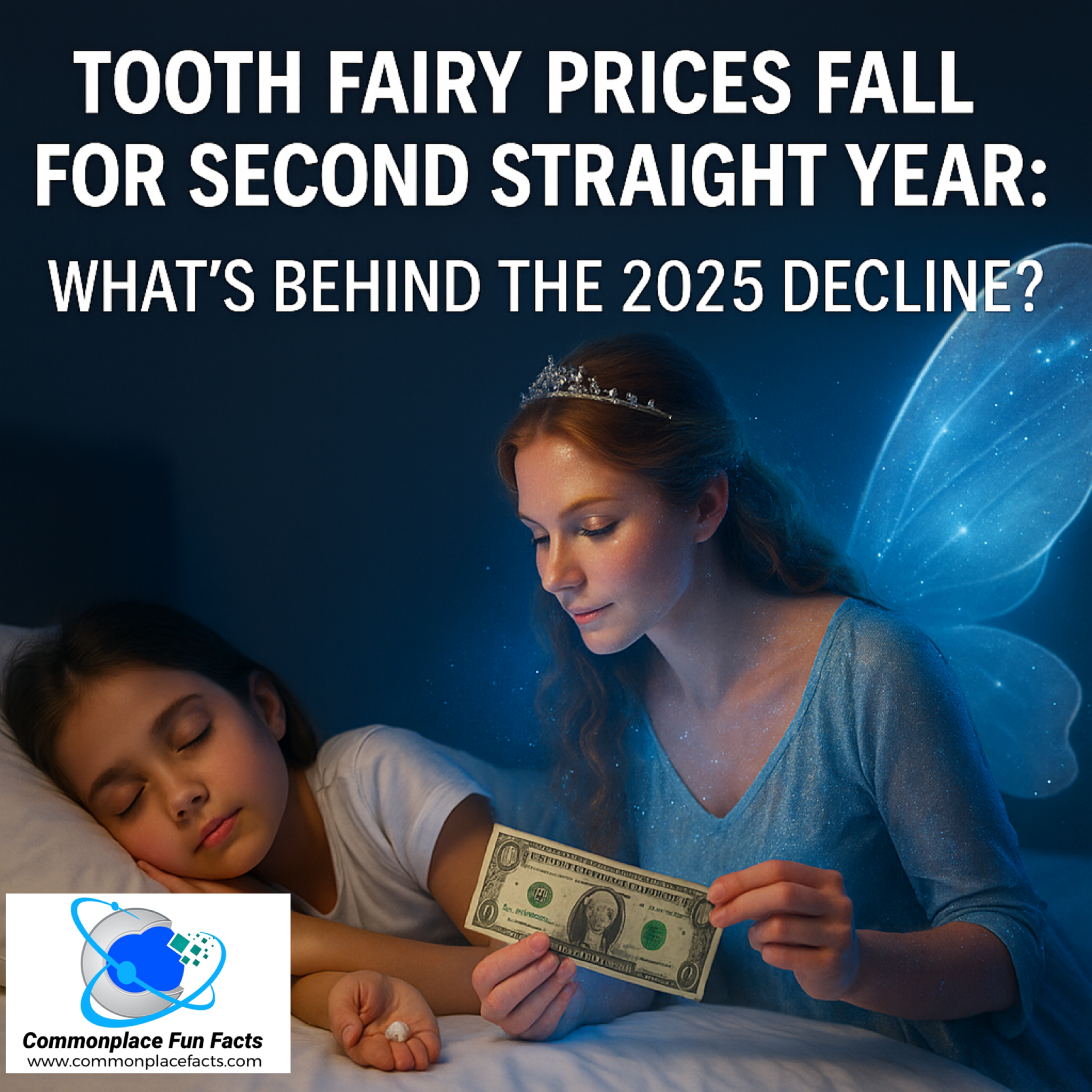

Tooth Fairy Prices: Defying the Economy
Prices have a well-documented habit of defying gravity. These days, waxing nostalgic about $2-per-gallon gas sounds like something lifted from a grandparent’s tall tale—right up there with walking uphill both ways to the gas station to grab a gallon of gas for 25 cents. College tuition climbs like it’s trying to summit Everest. Grocery bills are inflating faster than a politician’s ego. As for used cars? Let’s just say there are rusted-out jalopies on the market today with asking prices that would’ve bought a brand-new luxury vehicle not long ago.
In an economy where prices seem to climb higher than a cat stuck in a tree, there’s one surprising area where the numbers are actually heading south. That might be great news if you’re a winged nocturnal entity with a curious fondness for baby teeth, but for kids banking on a payout for their latest dental donation, it’s a serious letdown.
If you feel like the Tooth Fairy has been cutting corners lately—maybe slipping coins where bills once reigned supreme—you’re not alone. We first tackled this pint-sized financial juggernaut back in 2017, in “Tooth Fairy Budget Grows by an Arm and a Leg.” At the time, we noted that the value of a baby tooth had climbed to the kind of valuation that might tempt dentists to become the next cryptocurrency dealers. But oh, what a difference eight years and an economic backslide can make.
How Much Does the Tooth Fairy Pay For a Tooth?
According to Delta Dental’s 2025 Original Tooth Fairy Poll, the going rate for one pearly white has dropped to an average of $5.01—down 14% from last year’s $5.84. That might still sound like a decent payday for a bit of enamel that fell out while eating an apple, but it marks the second straight year of decline. For context, back in 2017, the national average was $4.66. In other words, the Tooth Fairy is now tightening her tulle-lined belt and rolling back prices like it’s a post-pandemic Black Friday sale.
The “first tooth bonus,” once considered the big signing fee of the deciduous dental draft, has also taken a hit, dropping to $6.24. So if your child has been holding out for an IPO-level windfall from the molars, you might encourage the little crumb-cruncher to diversify the portfolio into something with a better return—like couch cushions or grandparent guilt.
Economics 101: When the Tooth Fairy Prices Stops Following the Market
Historically, Tooth Fairy payouts have risen and fallen in harmony with the S&P 500. But just like a child who discovers their “fairy” has suspiciously dad-like handwriting, that illusion has officially been shattered. While the stock market soared in 2024—up roughly 26%—the value of a tooth sank like a molar in soda. According to FOX 26 Houston, this marks the most significant decoupling of fairy-based economics from Wall Street performance in recent memory. That’s bad news for anyone who diversified their retirement fund with incisors.
Regional Inequality: The Fairy Has Favorites
Geography, it seems, plays a huge role in your child’s dental dividends. According to Parents.com and WIFR, here’s the current payout map:
- South: $5.71 — The only region that actually saw an increase. Clearly, Southern charm adds value to the smile.
- West: $5.69 — Down a whopping 33%, back to 2021 levels. Not entirely surprising, because we don’t seem to see a lot of smiles in that part of the country, lately.
- Northeast: $4.59 — The first time it’s dropped below $5 since 2020. They may claim to have the best Fall colors, but Money Green isn’t one of them.
- Midwest: $3.46–$3.63 — Maybe the Tooth Fairy’s bundle of money was lost while changing planes at O’Hare?
Is It Inflation? Is It Budgeting? Is It…Growing Up?
Some analysts point to inflation and cost-of-living concerns. Others suggest that Gen Z parents—yes, we’re now old enough for that to be a thing—are reining in what had become a full-blown fantasy economy.

Whether it’s inflation, market jitters, or simply a case of magical belt-tightening, there’s no denying the Tooth Fairy is operating on a leaner budget. But before we start passing the hat for our favorite nocturnal dental collector, keep this in mind: even at $5.01 a tooth, that’s still nearly quadruple what she shelled out in 1998, when $1.30 could cover the going rate. So while she may be flying coach these days and swapping pixie dust for discount glitter, she’s still doing a lot better than she was back when dial-up internet was a luxury.
The Future of the Fairy
What’s next for this tiny titan of dental compensation? Will she go fully digital and start leaving Venmo credits? Will she outsource to an AI-powered molar valuation app? Will she unionize?
All we know is this: teeth are falling out, kids are still sleeping with hopes under their pillows, and the Tooth Fairy—however beleaguered—keeps showing up. She may be giving less, but in a world where most magical creatures have long since left the building, that’s still worth something.
What’s the going rate for a molar in your neighborhood? And how much loot did you rake in from your baby teeth? Let us know in the comments below.
You may also enjoy…

The Rising Costs of Partridges in Pear Trees
If you want to bless your true love during the 12 days of Christmas next year, you may want to save up your pennies, starting now. According to the latest study, the 364 gifts that are handed out over the course of the 12 days costs $155,407.18 — up 0.6% from 2014’s prices. The breakdown…

The Forbes Fictional 15: Exploring the Wealthiest Characters in Fiction
Who’s the richest fictional character? Dive into the lucrative world of the Forbes Fictional 15, where billionaire tycoons like Scrooge McDuck and Tony Stark battle for the top spot. Fictional wealth has never been this fun! #ForbesFictional15 #BillionaireBattle

Meet Mansa Musa: The Richest Person in History
Mansa Musa was the richest person in history. Why have you never heard of this man of unimaginable wealth?







Leave a Reply to Commonplace Fun FactsCancel reply