

The Levee: Taking Breakfast In Bed to a Whole New Level
All of us have days when we don’t want to get out of bed. Wouldn’t it be nice if you could If you could take care of all of the day’s demands from under the comfortable covering of your soft, warm blankets? Insted of getting up and going to work or school, how nice it would be to have everyone come to you!
What we’re talking about isn’t beyond the realm of possibilities — at least if you ruled over a realm. Back in the golden days of yore, mornings would look quite different from ours if you were a member of the ruling class. Forget the coffee rush or checking emails. Your royal duties would begin with a levee, which is a fancy way of saying, “Stay in bed while people line up to remind you how wonderful you are.” Because, let’s face it, nothing says “I’m important” quite like ruling from beneath a pile of silk sheets while everyone else scurries about.
As with all good things, this hilariously decadent of royal customs got a little out of hand by the 18th century, when the levee system ballooned to epic proportions. Let’s just say that if you were near the top of the social food chain, you might need to block out your entire morning (or early afternoon, depending on your standing) just to lie there while your inferiors formed a procession of groveling admiration. No rest for the adored, right?
The Levee: The Bed is Your Throne
First of all, you wouldn’t need something as mundane as a weaver’s larum to wake you up. Most likely, the sound of your loyal admirers scurrying about would start your royal morning routine. That’s when the levee ceremony would begin.

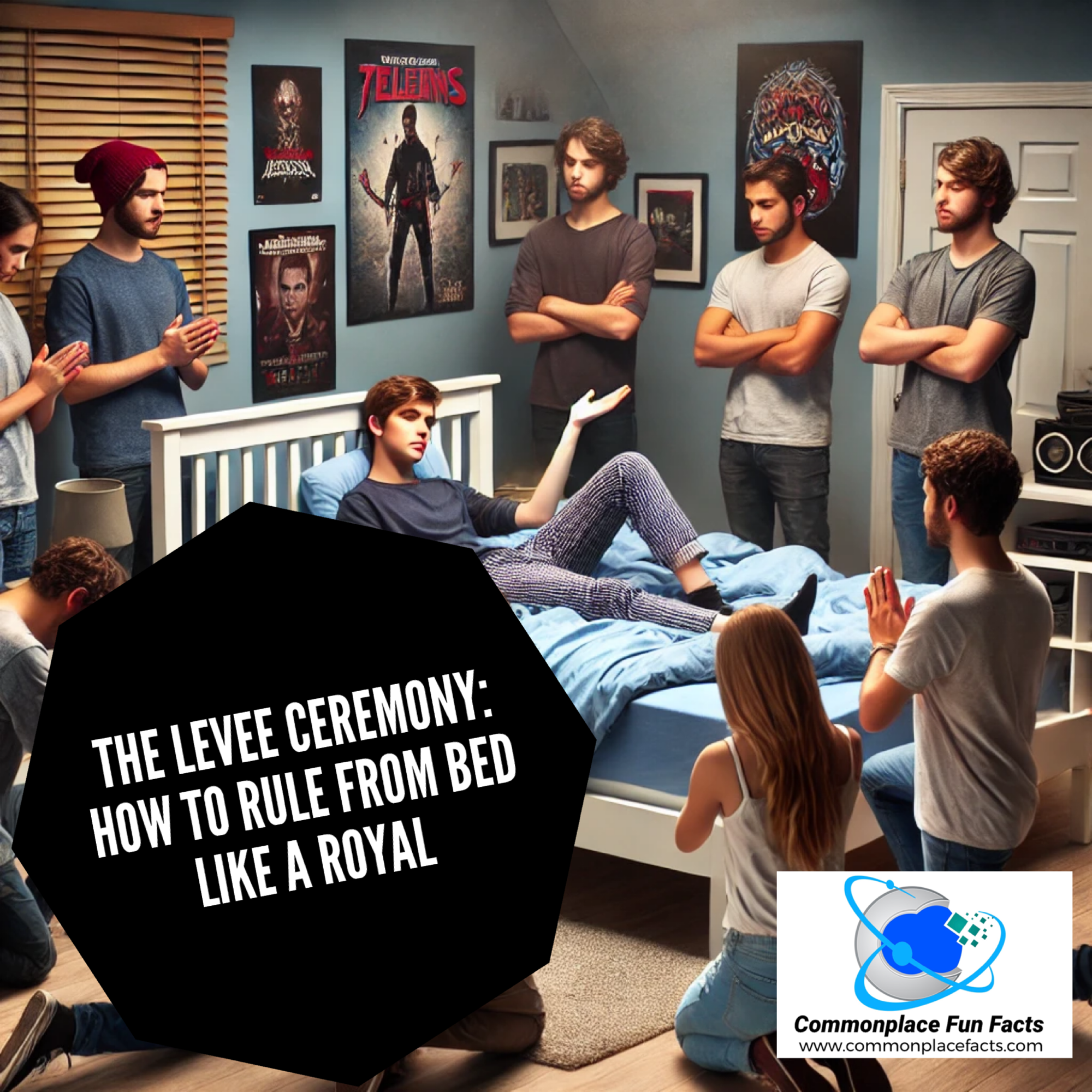
In essence, a levee was a formal occasion for high society types to come pay their respects to the king (or queen), while the monarch did nothing more than remain in bed. Honestly, it’s the kind of event that could only be dreamed up by a ruling class that had far too much time on their hands. Imagine this: You’re lying there, still in your nightclothes, and one by one, your loyal subjects arrive to remind you just how grand you are. It was a morning routine designed to pump up your ego before you’d even had breakfast.
However, as the social ladder expanded, so did the levee’s guest list. And let’s just say things got a little… complicated.
Too Many Levees, Not Enough Time (or Bed Space)
By the 18th century, the levee system had evolved into a bureaucratic nightmare. The sheer number of levees, and the ever-growing ranks of nobility trying to outdo one another in who could grovel best, meant that those at the very top of society’s pyramid were stuck in bed for hours—sometimes well into the afternoon. Henry Fielding, the 18th-century novelist, took note of this absurdity and described it beautifully in 1742:
“. . . early in the morning arises the postillion, or some other boy, which no great families, no more than great ships, are without, and falls to brushing the clothes and cleaning the shoes of John the footman; who, being drest himself, applies his hands to the same labours for Mr. Second-hand, the squire’s gentleman; the gentleman in the like manner, a little later in the day, attends the squire; the squire is no sooner equipped than he attends the levee of my lord; which is no sooner over than my lord himself is seen at the levee of the favourite, who, after the hour of homage is at an end, appears himself to pay homage to the levee of his sovereign. Nor is there, perhaps, in this whole ladder of dependence, any one step at a greater distance from the other than the first from the second; so that to a philosopher the question might only seem, whether you would chuse to be a great man at six in the morning, or at two in the afternoon.”

In other words, this whole operation was a cascade of early-morning chaos, with the lowliest servant brushing shoes for the next highest person, all the way up the social ladder until everyone’s standing in line at the levee. The question, as Fielding so rightly points out, isn’t whether you’ll be great—but whether you’d prefer to start being important at the crack of dawn or sleep in until the afternoon. Tough call, really.
Where to Stand During a Levee: A Masterclass in Hierarchy
Of course, your position in the levee wasn’t just about when you showed up; it was also about where you stood. The closer you could inch toward the royal bed, the more you mattered. The king’s favorite courtiers got prime real estate: the ruelle, that space between the bed and the wall, where the royal shoes and socks probably lay discarded. For the rest of the crowd, it was a case of “stand by the foot of the bed if you’re lucky” or “hover awkwardly near the door if you’re not.” Ah, the glory of aristocracy.
Levees: When Lounging in Bed Was a Full-Time Job
It’s hard to imagine that what began as a simple act of royal indulgence turned into an hours-long affair, where the most powerful people in the land were essentially held hostage by their own need to be admired. But such was the life of a monarch—or anyone else of significant importance—during the heyday of the levee. You could spend the better part of your day surrounded by flatterers, all while never leaving the warmth of your blankets.
So, next time the day seems a little too intimidating for you, you might consider reviving a royal tradition. Call for a levee ceremony from the comfort of your bed. You’ll quickly find out how many admirers you really have.
You may also enjoy…

10 Illnesses That Changed History and Redirected the World
Discover 10 illnesses that changed history, altered dynasties, toppled plans, reshaped governments, and even redrew maps.

The 1945 Japanese Coup Attempt to Stop Emperor Hirohito’s Surrender Broadcast
In August 1945, Japanese officers tried to seize the Imperial Palace, destroy Hirohito’s surrender recording, and keep World War II going. This is the story of hte 1945 Japanese coup attempt to stop the public from hearing the Emperor’s voice.

The Erfurt Latrine Disaster of 1184: When Politics Literally Went Down the Toilet
In 1184, a peace meeting in Erfurt ended when the floor collapsed and nobles plunged into a cesspit. The bizarre Erfurt Latrine Disaster was real.





Leave a Reply