
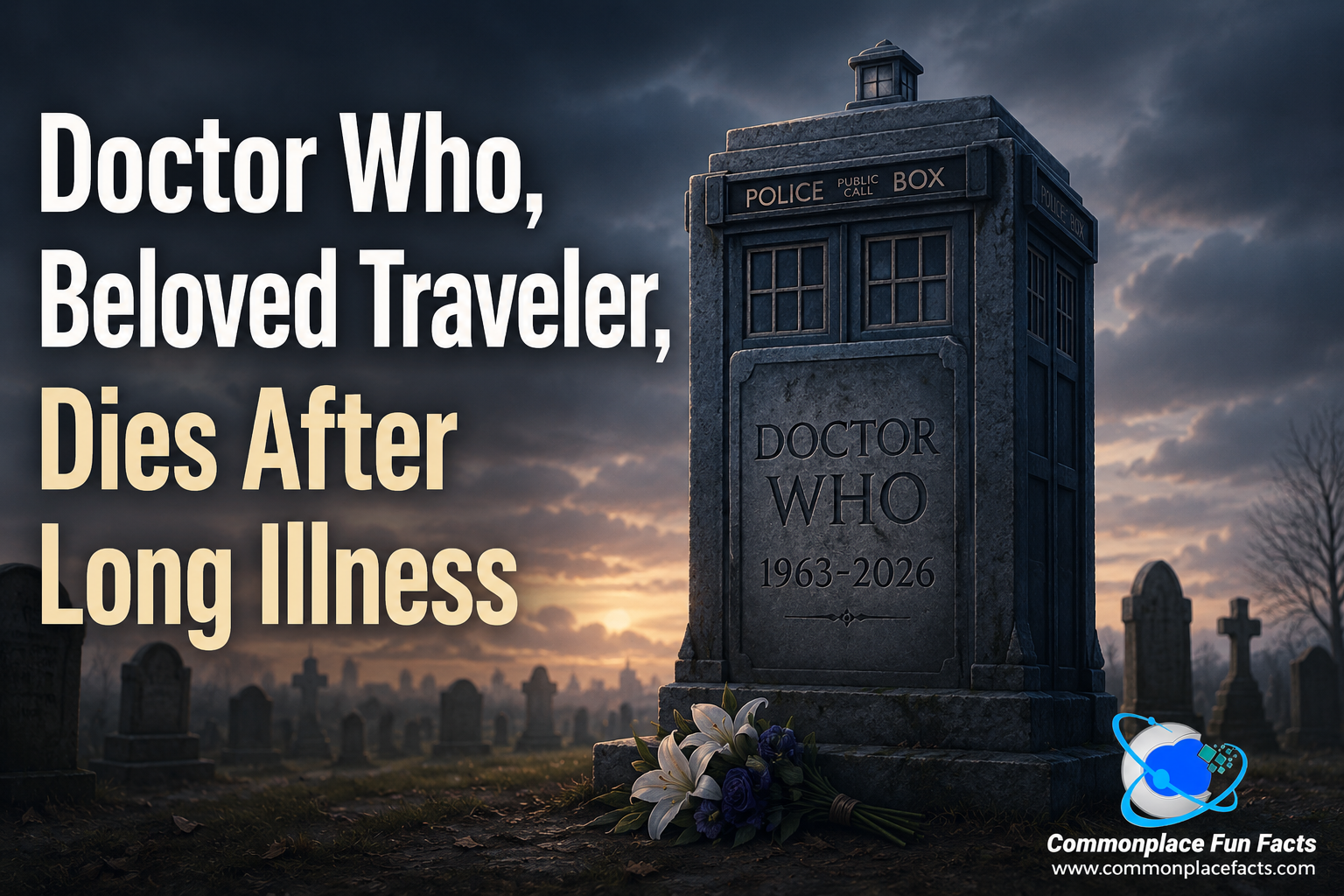

R.I.P. Doctor Who
Doctor Who, beloved television adventurer, cultural institution, scarf enthusiast, screwdriver collector, and occasional menace to continuity, died after a prolonged period of declining health. He was 62.
Born in 1963, Doctor Who spent its early years charming audiences with little more than imagination, cardboard corridors, rubber monsters, good writing, and the kind of budget that required fog machines to do the work of entire galaxies. It grew up strange, clever, funny, frightening, and unmistakably British, which is to say it was able to make children hide behind sofas while adults pretended they were only watching to reassure the children in case they got scared.
For decades, Doctor Who was loved by millions. It was never perfect, but that was part of the charm. It could be brilliant one week, baffling the next, and occasionally held together with string, optimism, and a BBC prop department that had clearly been asked to invade the universe with £14 and a sink plunger. Somehow, it worked.
Indeed, thrift was one of Doctor Who’s defining virtues. It did not need endless spectacle to inspire wonder. It could make a quarry look like an alien planet, a hallway look like a starship, and a man in a silver suit look like a terrifying cybernetic horror instead of someone late for a very specific nightclub. It did not always have much, but it made much of what it had.
That is what made the final years so painful to watch.
Loved ones say Doctor Who began showing symptoms of a personality disorder approximately ten years ago. At first, the changes were subtle. Longtime friends noticed it seemed less like itself. The stories became more erratic. The charm grew strained. The sense of wonder, once effortless, began to feel manufactured. It increasingly spoke not with audiences, but at them, which is rarely a good sign unless one is hosting a fire safety seminar.
As the condition worsened, caregivers insisted everything was fine. When concerned fans raised questions, they were ignored. When the concerns became too obvious to ignore, they were explained away. When explanation failed, the caregivers blamed the fans as being the real problem.
This was perhaps the most heartbreaking development. Doctor Who had once drawn people in. In its prime, the Doctor invited viewers aboard the TARDIS and made them feel as though the universe was larger, stranger, and more wonderful than they had imagined. In later years, however, those who loved the show were increasingly treated not as family, but as embarrassments at Thanksgiving who needed to be seated near the kitchen.
The caregivers did not respect the fans. They criticized them. They did not listen to those who remembered Doctor Who at its best. They dismissed them as obstacles to progress, as if affection for the patient were somehow evidence of hostility toward recovery.

Meanwhile, the expenditures grew extravagant. Doctor Who, once famously frugal and inventive, was placed under the care of people who spent remarkable sums while overseeing a steadily deteriorating quality of life. The old magic had come from ingenuity. The new version seemed to believe magic could be purchased wholesale, preferably with digital effects, press releases, and the faint air of a committee congratulating itself for bravery.
But money did not restore the steadily fading vitality. Neither did branding. Neither did scolding the people who had stayed by his side for decades.
Instead, Doctor Who became increasingly isolated from many of those who had loved him longest. Viewers drifted away, dropping to one-tenth of its once-vibrant audience. Excitement faded. Conversations that once centered on imagination, monsters, companions, cliffhangers, and favorite Doctors became grim little check-ins about whether anyone was still watching.
By the end, Doctor Who was not hated. That would almost have been easier. Hatred still requires energy. What surrounded the Doctor in his final days was something sadder: comparative loneliness, indifference, and the awful quiet that comes when people stop arguing because they have stopped caring.
For longtime fans, the end brings mixed emotions. There is grief, certainly. They remember what Doctor Who was: funny, odd, brave, scary, ridiculous, humane, and occasionally held together by visible tape. They remember the wonder. They remember the possibilities. They remember the monsters. They remember the companions. They remember being invited into a blue box that was bigger on the inside.
But there is also relief.
Anyone who has watched a loved one decline understands the terrible mercy that sometimes comes when the struggle ends. You do not stop loving the person because they changed. You do not stop remembering who they were before the illness. But there comes a point when the kindest thing anyone can say is that the suffering is over.
Doctor Who is survived by generations of fans, countless memories, magnificent Doctors, an unforgettable theme tune, and enough contradictory timelines to keep scholars arguing until the heat death of the universe.
In lieu of flowers, the family asks that mourners rewatch a favorite episode, remember the good years, and resist the temptation to let the final chapter define the whole story.
The universe was better when Doctor Who was in it.
Even if, near the end, he no longer seemed entirely sure who he was.
You may also enjoy…

A Talking Cabbage as a Doctor Who Companion? Tom Baker’s Veggie Proposal
Did you know that if Tom Baker had his way, Doctor Who would have had a talking cabbage as a companion?

To Boldly Go Where No Time Lord Has Gone Before
BBC’s popular television program Doctor Who has been on the air since 1963. Its title character, the Doctor, is over 2,000 years old and has been traveling through time and space for almost all of that time. It goes without saying that such a character would inevitably encounter many strange and mysterious beings along the…

How the UK Depends on the BBC Show “Today” to Prevent Doomsday
Why the BBC Show “Today” Helps Hold Doomsday at Bay If you are a fan of the BBC, the thought of your favorite program going off the air might seem like a sign of the end of the world. If that favorite program happens to be the radio show Today, brace yourself; if it isn’t on…




Leave a Reply